Is the Kyoto International Manga Museum worth a few hours of your Kyoto trip, even if you can’t read Japanese? I visited on November 25, 2026, the museum’s 20th birthday, and my answer is a clear yes. Behind the doors of a beautiful old elementary school, I found Hayao Miyazaki’s hand cast, a giant Phoenix carved by a Buddhist sculptor, manga from 100 years ago, and a live paper-theater show with English subtitles.
Key points
- Admission is ¥1,200 for adults (about $8), and you can leave and come back as many times as you like on the same day
- No Japanese? No problem: English signs, a corner of translated manga, and kamishibai (paper theater) with English subtitles
- Don’t miss: Hayao Miyazaki’s hand cast, Osamu Tezuka’s giant Phoenix, and the “1912 ▶ 1945” bookshelf
- Plan for 2 to 3 hours, and time your visit for the 11:30 or 14:00 kamishibai show
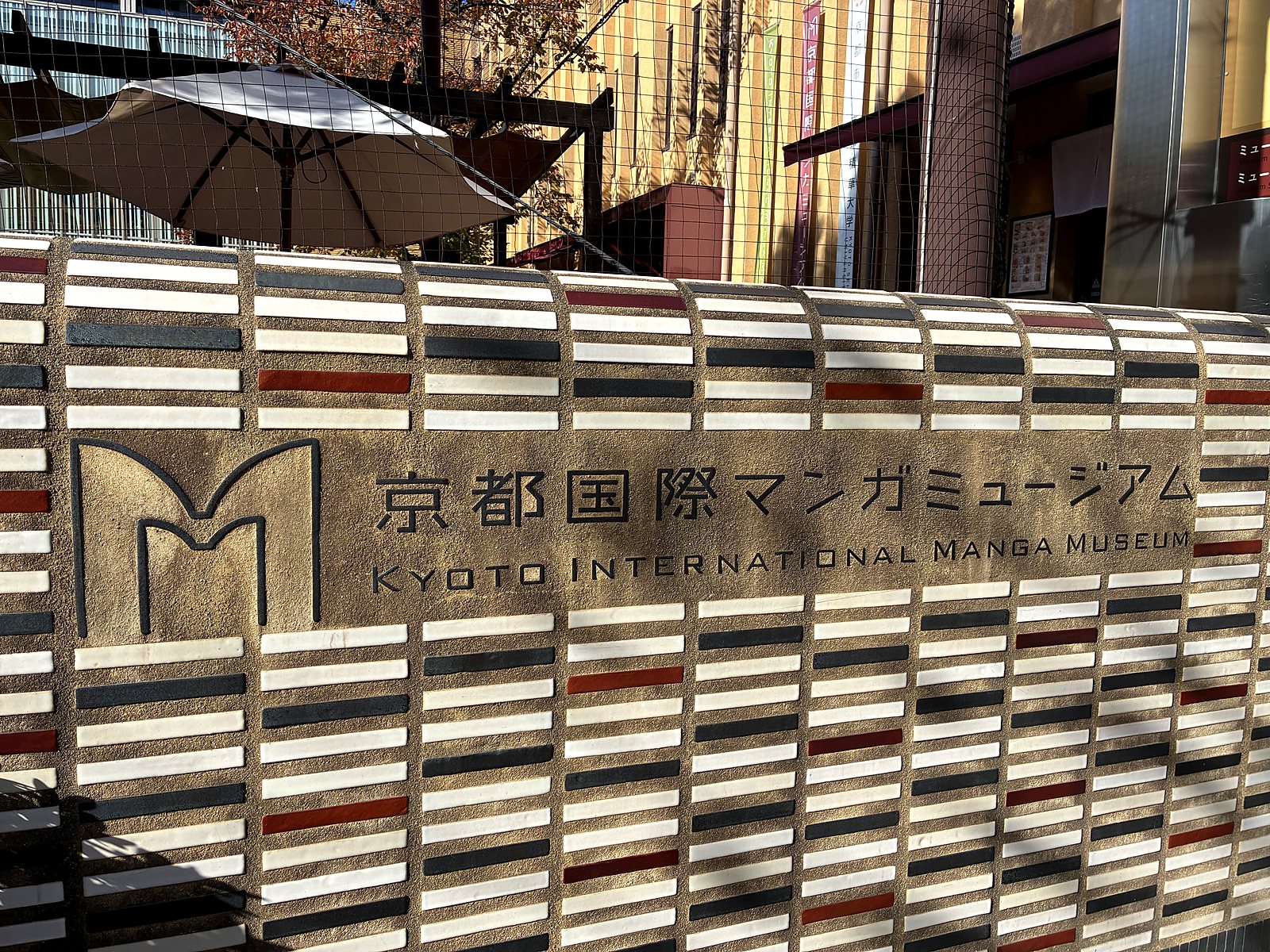
What is the Kyoto International Manga Museum?
Opened in 2006 as a joint project between Kyoto City and Kyoto Seika University, the museum is part museum, part library. Its collection holds about 300,000 manga items, and around 50,000 books line the 200-meter “Wall of Manga” that runs through the building. Most of them you can simply pull off the shelf and read.
The best part may be the building itself: the former Tatsuike Elementary School, built in the early Showa era. The wooden floors, the staircases, and even the school auditorium are still here, and the old schoolyard is now a lawn where people sit and read in the sun.
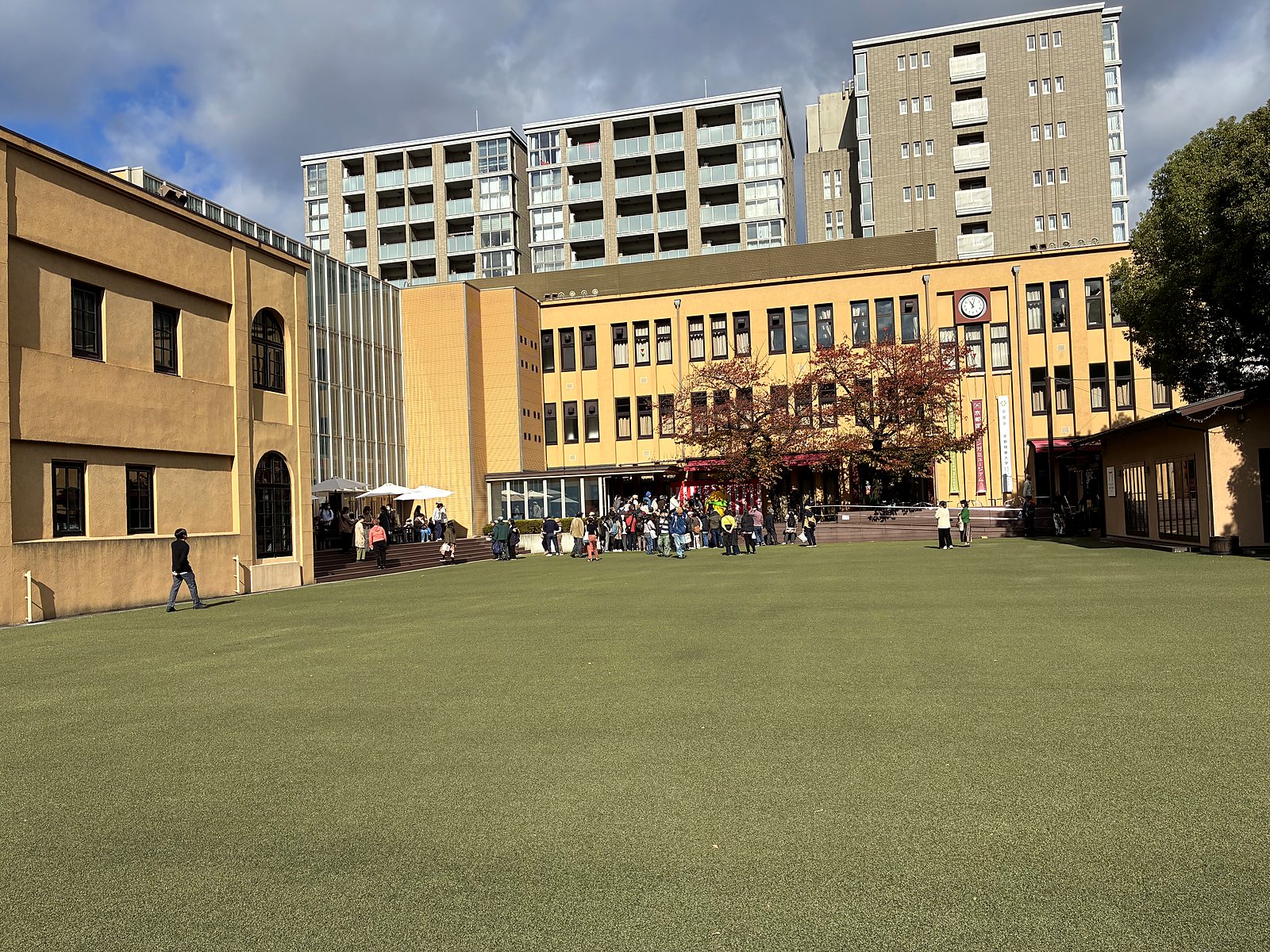
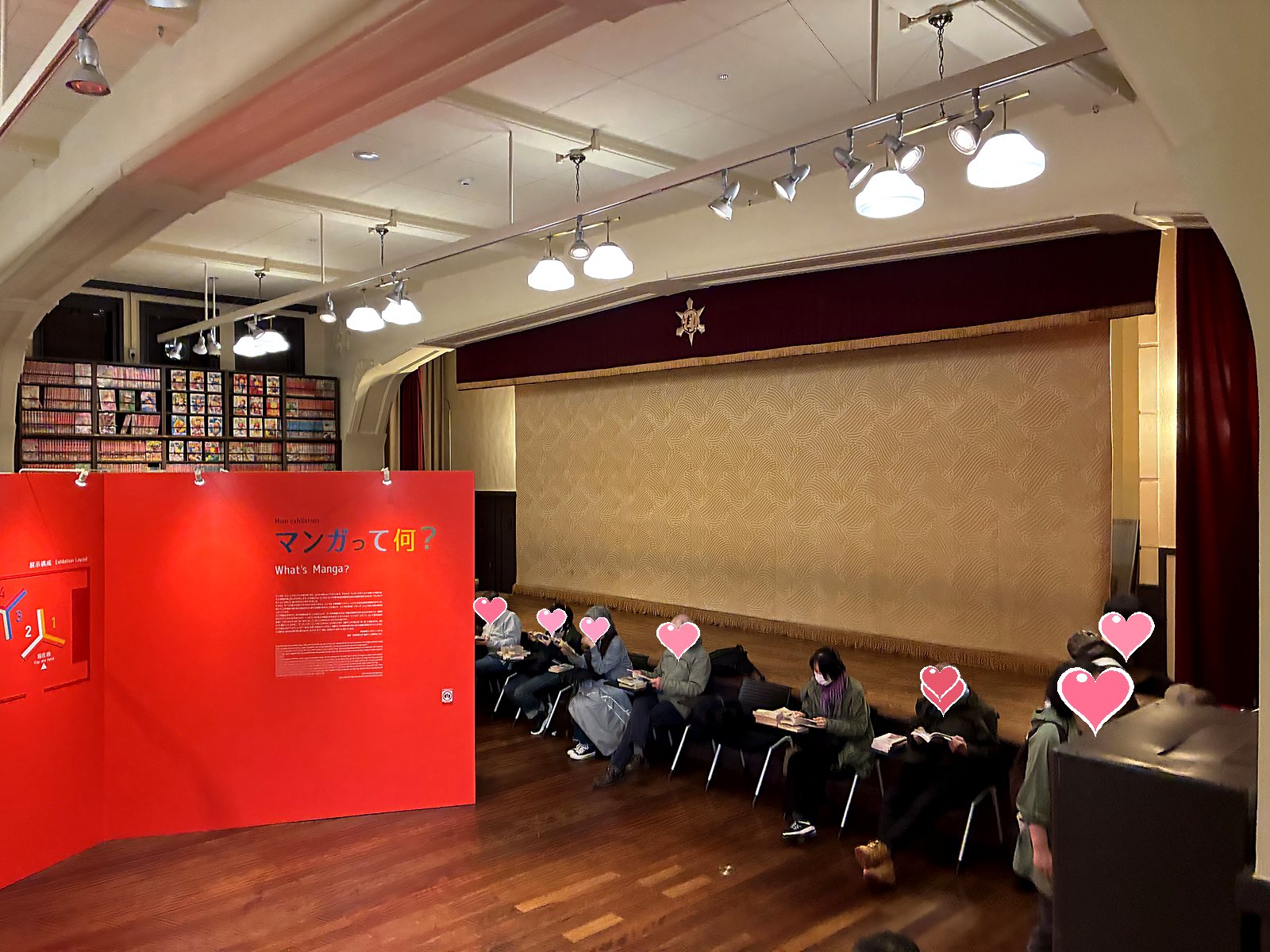
Reading manga inside a real Japanese school building from almost 100 years ago? That alone is worth the trip!
Tickets, hours, and the re-entry trick
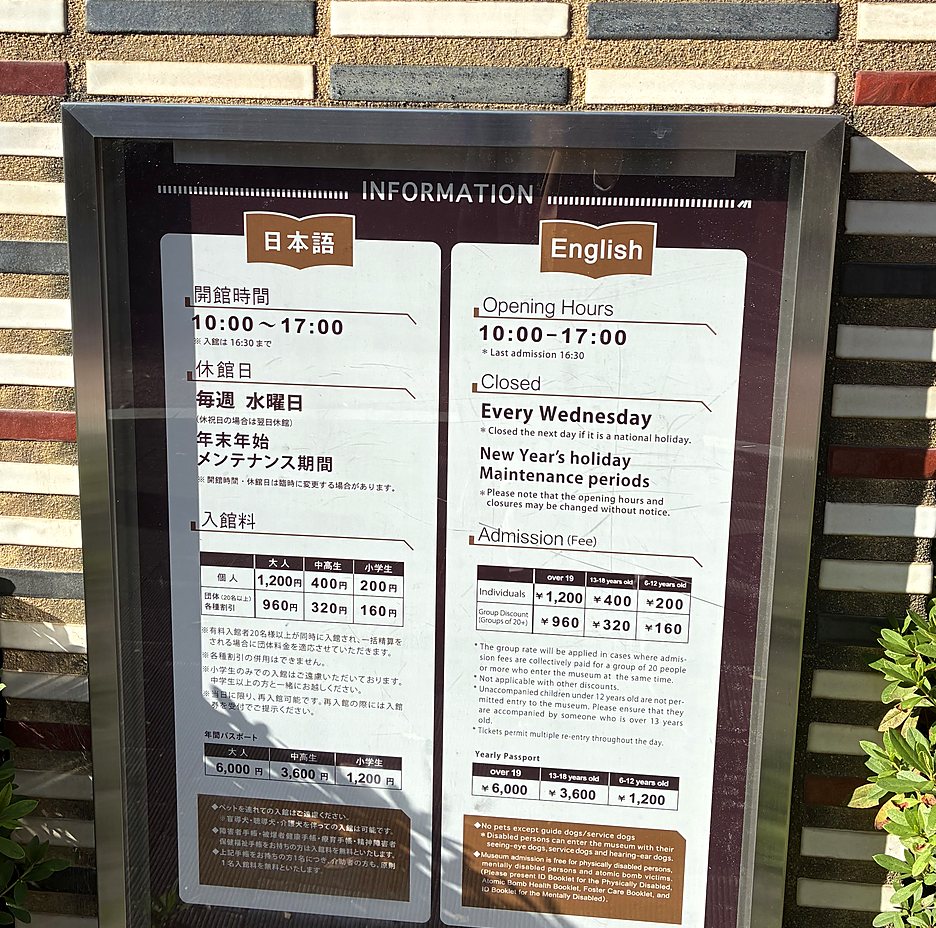
| Item | Details |
|---|---|
| Adults | ¥1,200 (about $8) |
| Ages 13–18 | ¥400 (under $3) |
| Ages 6–12 | ¥200 (just over $1) |
| Hours | 10:00–17:00 (last entry 16:30) |
| Closed | Wednesdays (or the next day if Wednesday is a national holiday), New Year holidays, maintenance periods |
At today’s exchange rate (around ¥159 to the US dollar in late November 2026), ¥1,200 works out to roughly $7.50, so call it $8. That’s less than a movie ticket in most US cities, for a museum you can spend the whole day in.
Here’s the tip most visitors miss: your ticket lets you re-enter as many times as you want on the same day. Go out for lunch nearby, then come back to keep reading in the afternoon. Tickets can also be bought online through the official website.
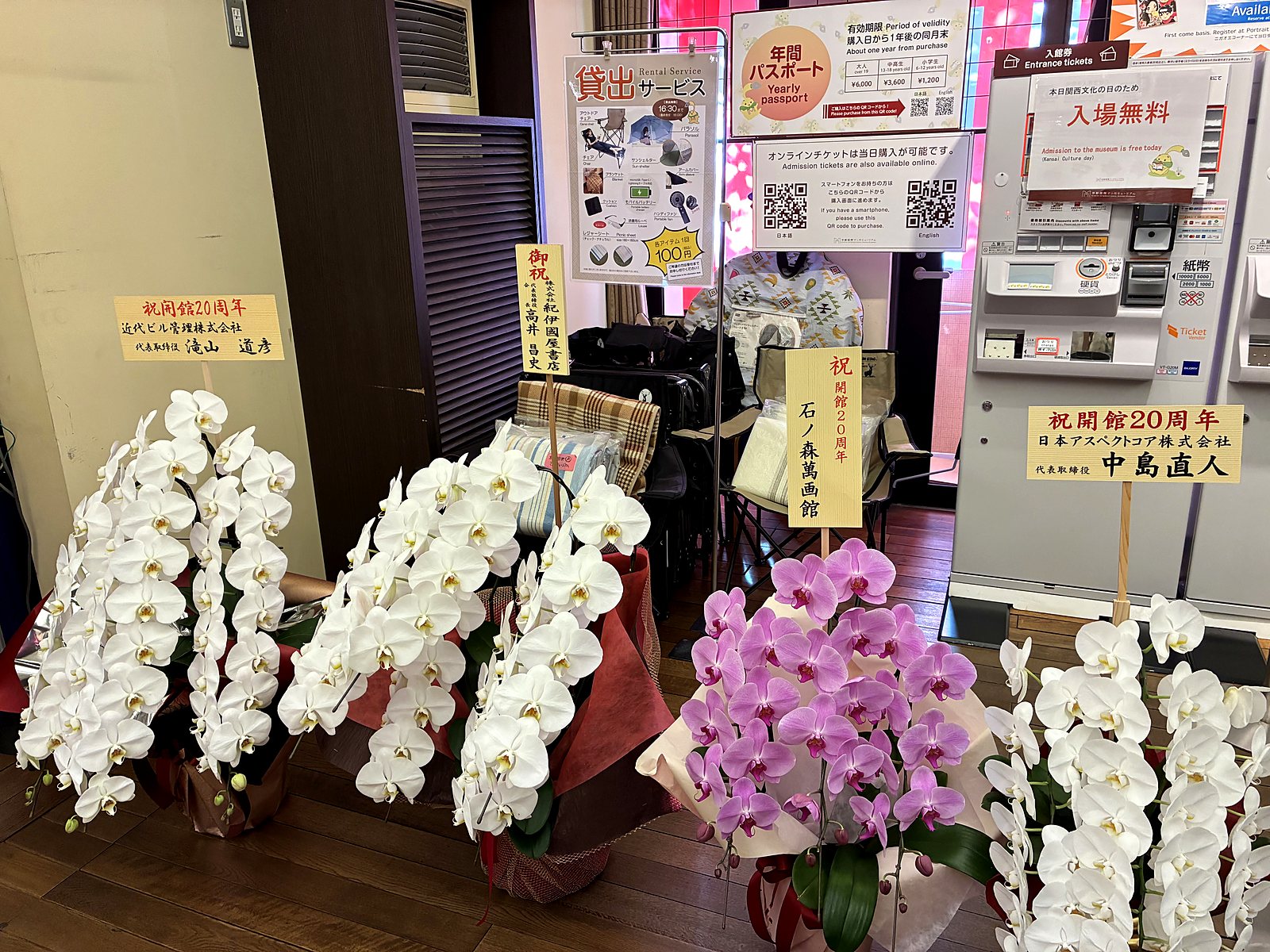
On the day I went, entry was actually free, because November 25 was “Kansai Culture Day,” when many cultural facilities in the Kansai region open their doors at no charge. If your trip falls around late November, it’s worth checking.
A 20th birthday party, with ninjas and rice-cake throwing
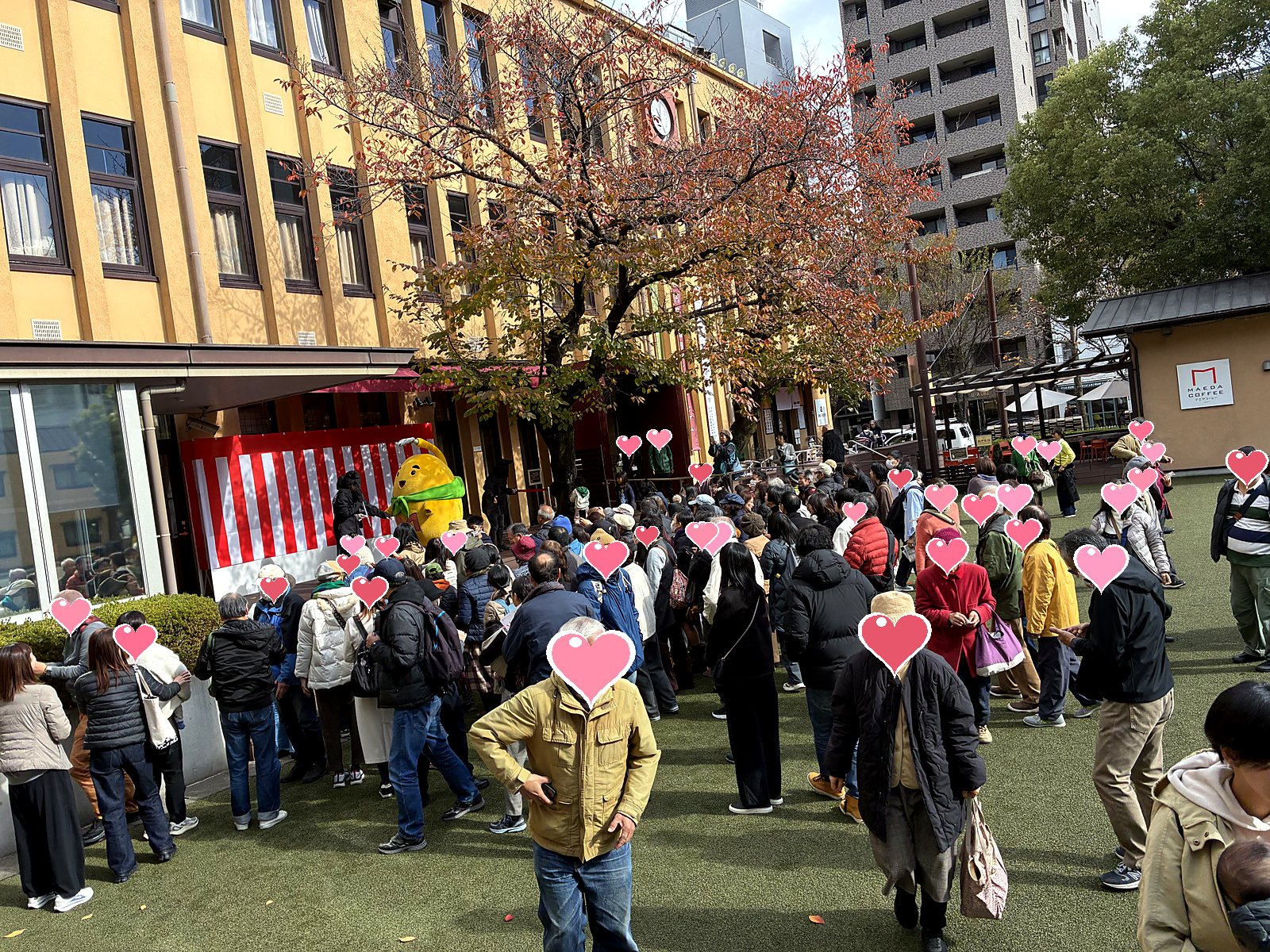
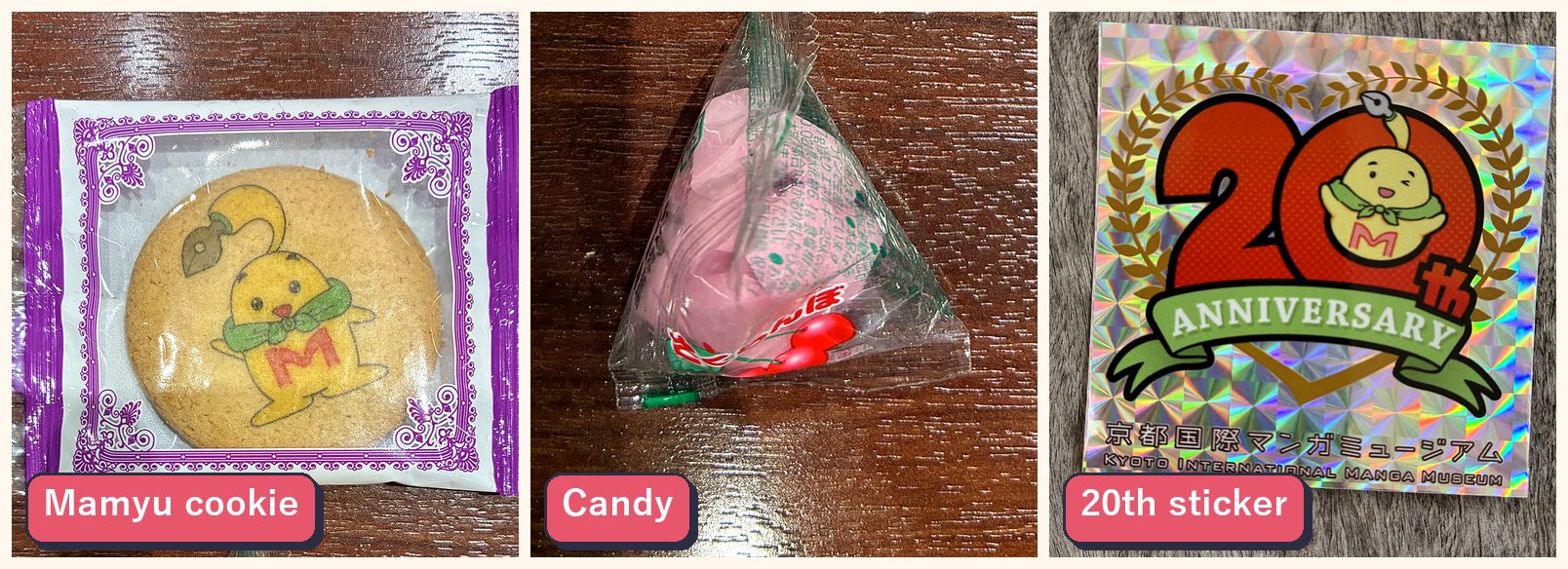
To celebrate its birthday, the museum held a mochi-maki, a traditional Japanese custom where rice cakes and sweets are tossed to the crowd to share good luck at celebrations. Before it started, ninjas in black suddenly appeared on the lawn. Nobody explained why. It was perfect.
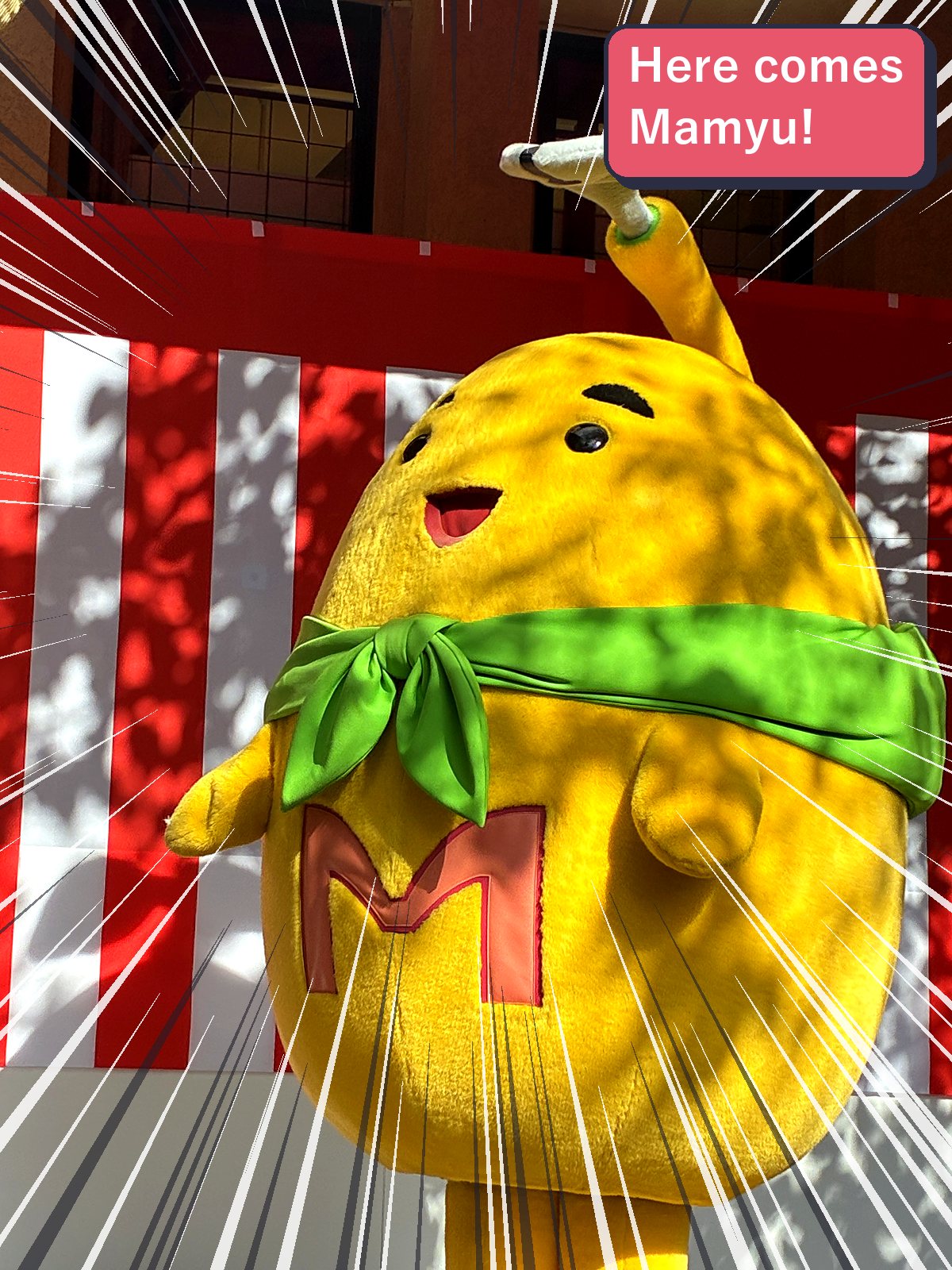
Mamyu held a long wooden tool while a ninja loaded it with treats, and together they flung them into the crowd. Strange teamwork, but very effective.
Manga history you can walk through
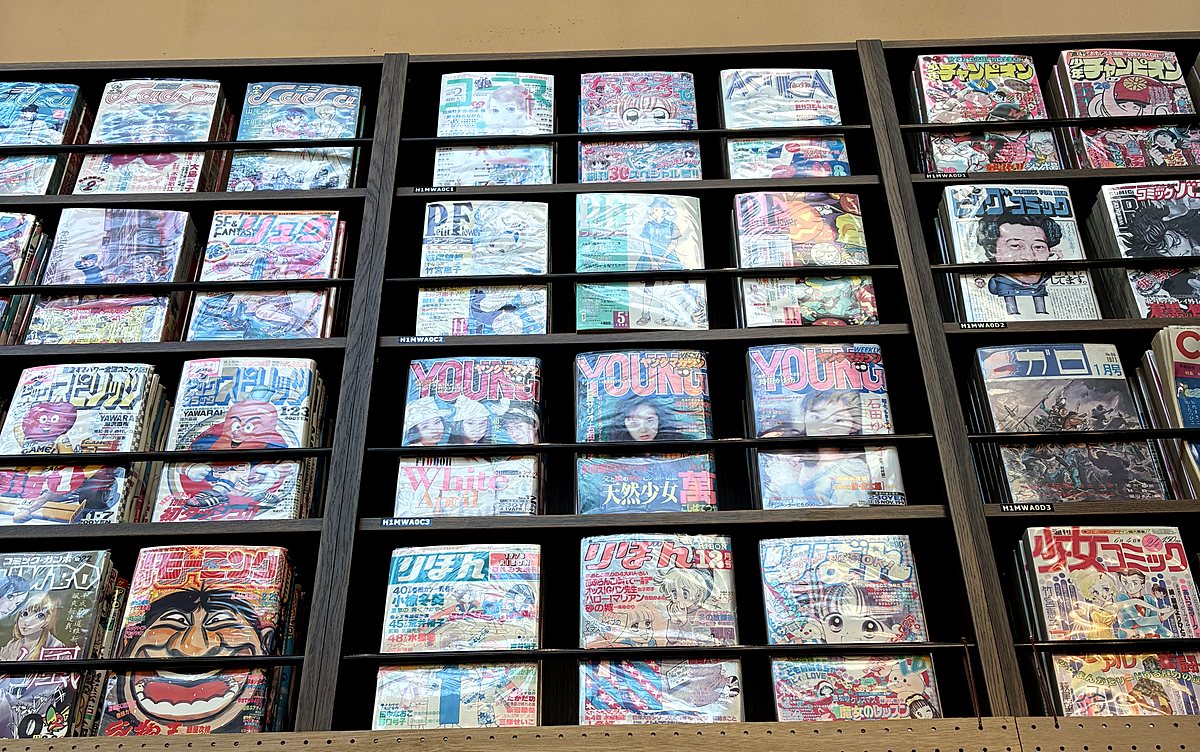
Look up, and you’ll see old manga magazines stacked almost to the ceiling: girls’ magazines like Ribon, weekly titles for young men, and the legendary alternative magazine Garo. These top shelves are for viewing only, but spotting covers from the 1980s and ’90s is surprisingly addictive. I even found a 1993 issue of Weekly Young Magazine with a young Yuriko Ishida, one of Japan’s best-loved actresses, on the cover.
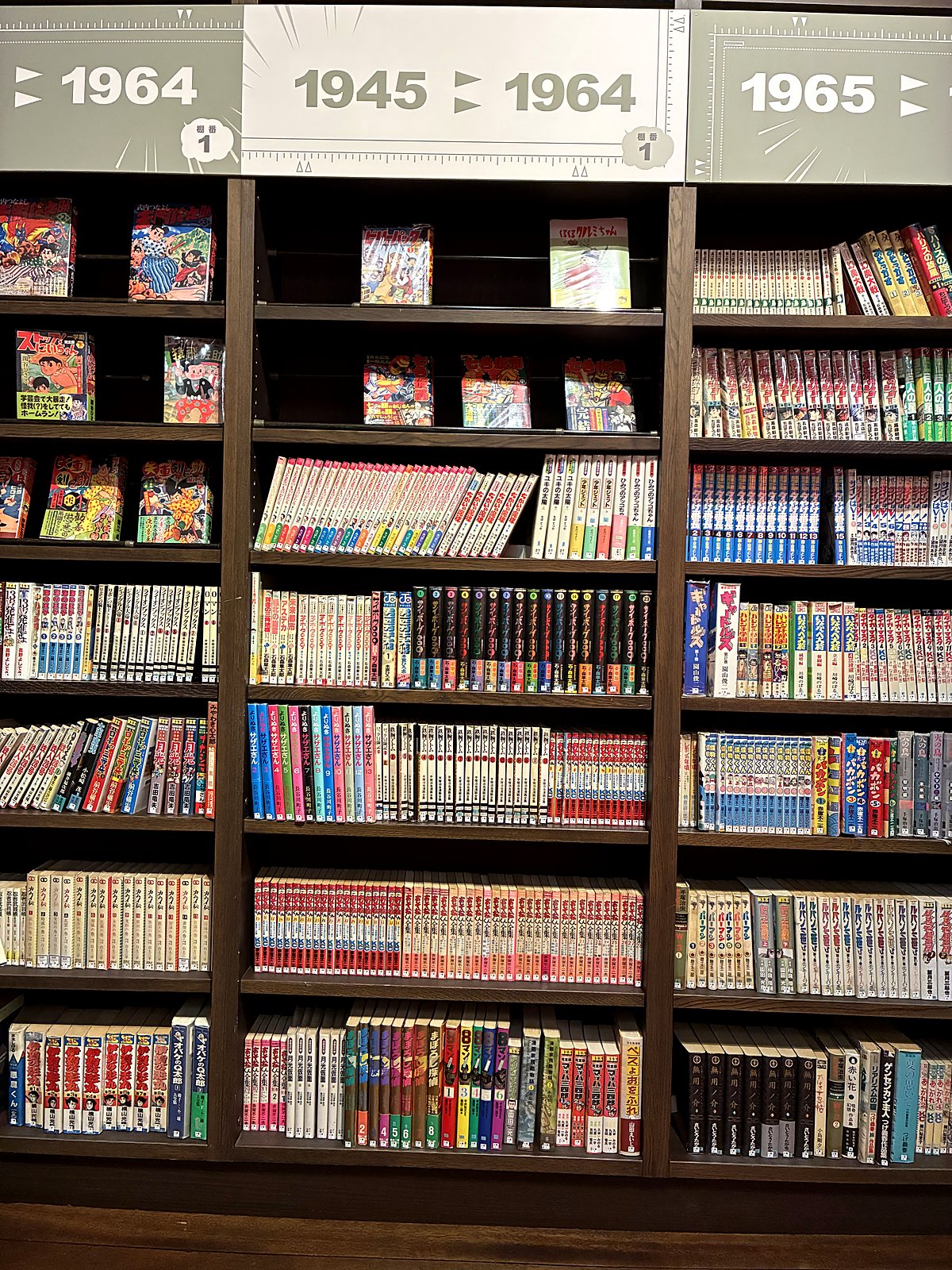
Even more impressive is a row of bookshelves arranged by era. The very first shelf is labeled “1912 ▶ 1945”: manga from roughly 100 years ago (some are reprints).
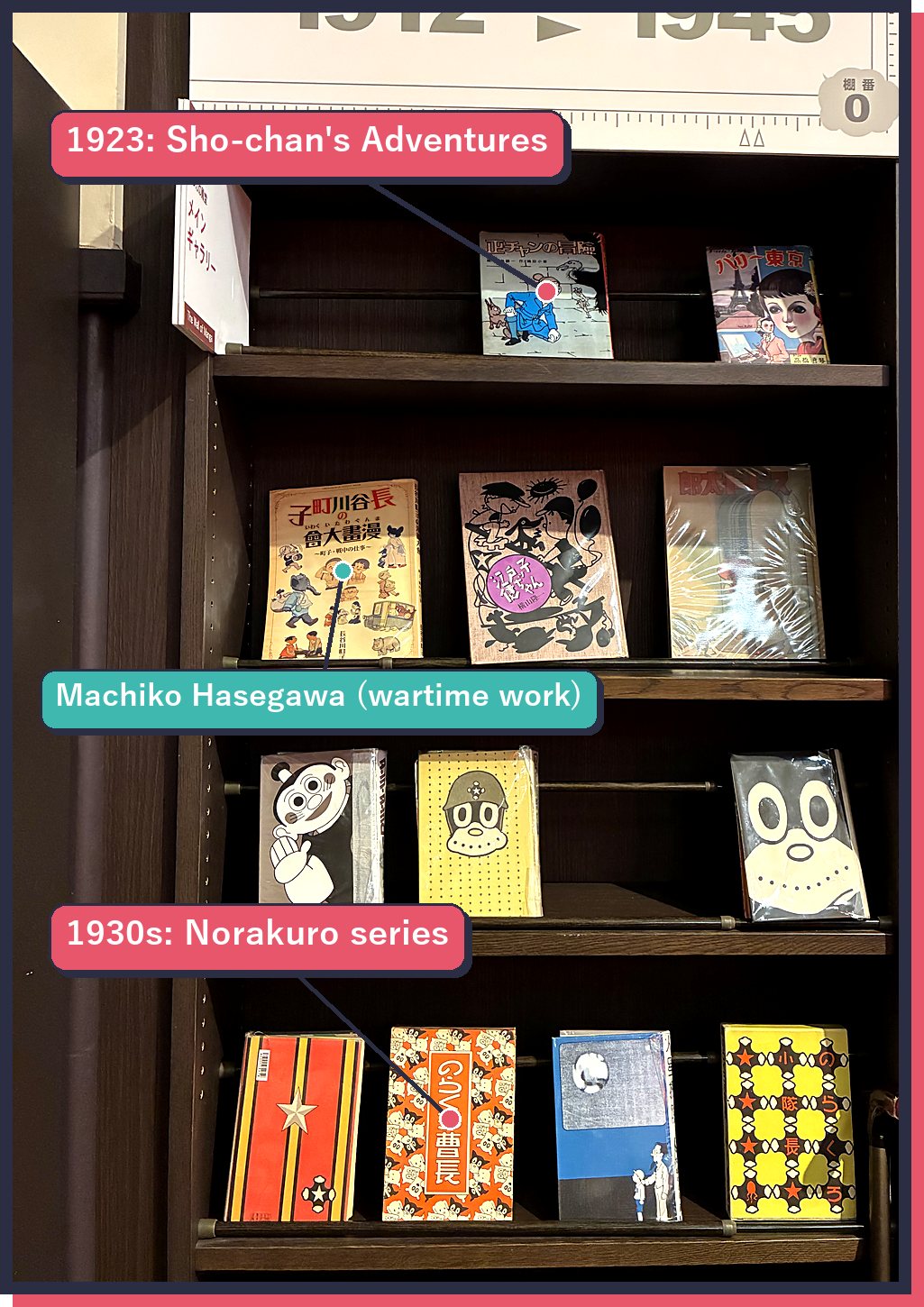
- Sho-chan’s Adventures (from 1923): one of the earliest Japanese comics to use speech balloons
- Norakuro (from 1931): Suiho Tagawa’s stray black dog who joins the army and slowly rises through the ranks. It was a huge hit with kids before World War II
- Machiko Hasegawa: the creator of the beloved family comic Sazae-san. This book collects her work from the war years
What surprised me most: these covers still look stylish today. You could put the plain Norakuro face cover in a design shop and nobody would guess it’s nearly a century old.
Hayao Miyazaki’s hand, and a Phoenix carved like a Buddha
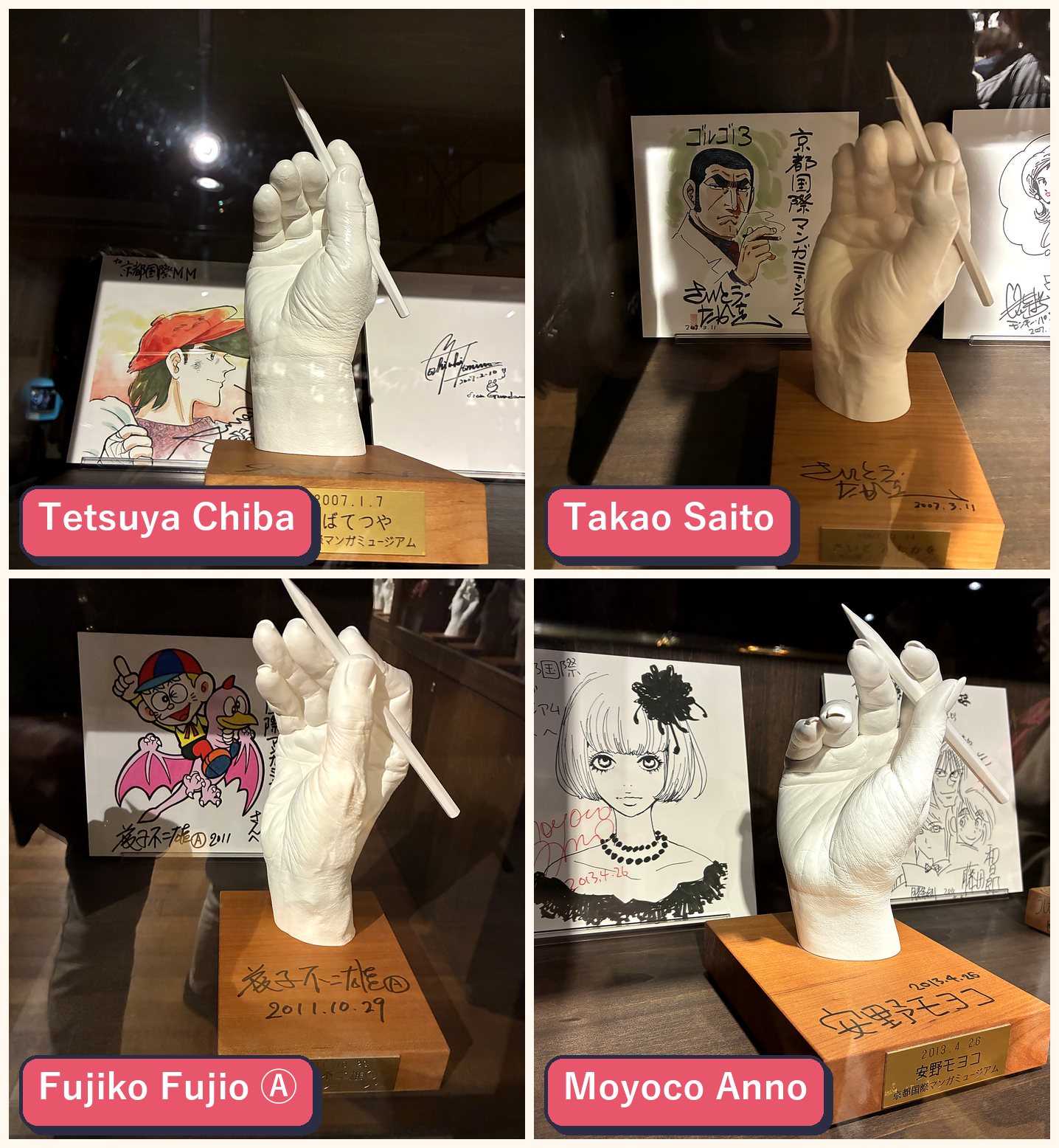
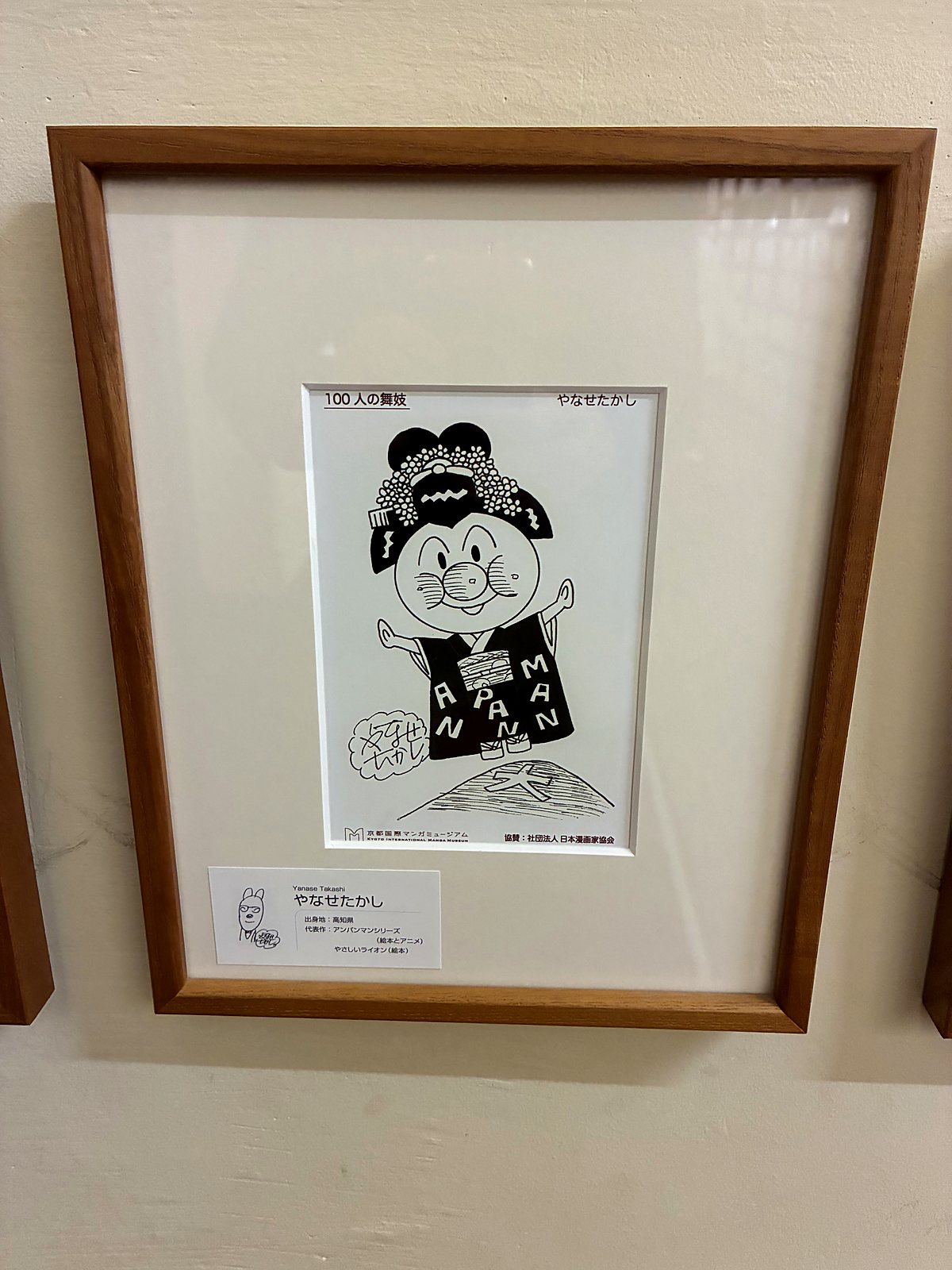
On the second floor, Gallery 6 displays plaster casts of the hands of more than 100 manga artists who have visited the museum. Each one holds a pen, frozen in the pose that created their famous works.
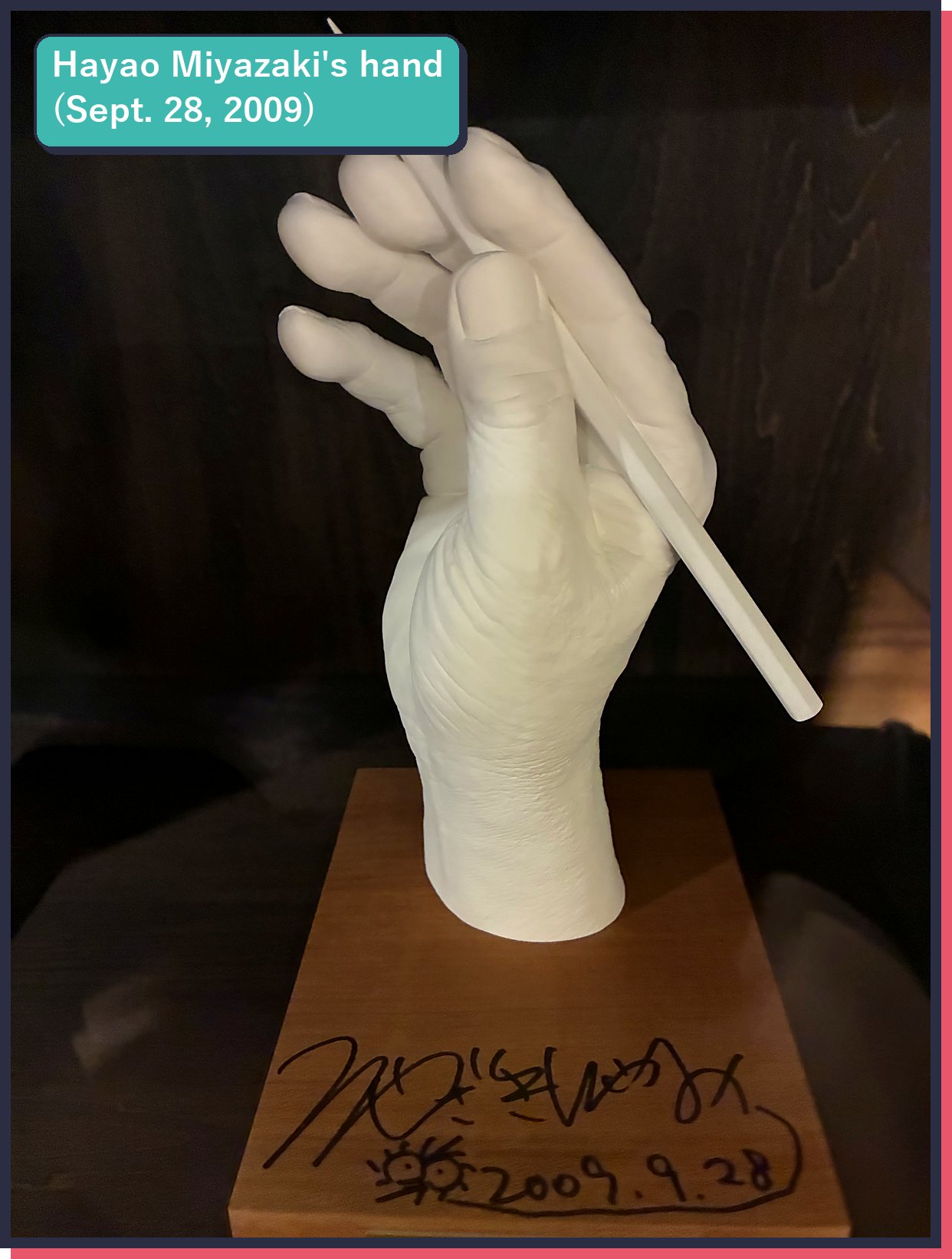
Then I found this one. Written on the base in Japanese hiragana: “Miyazaki Hayao,” dated September 28, 2009. The museum’s official list of artists includes Hayao Miyazaki, the director of Spirited Away and My Neighbor Totoro, under 2009. Standing in front of the hand that drew Totoro is a quietly emotional moment.
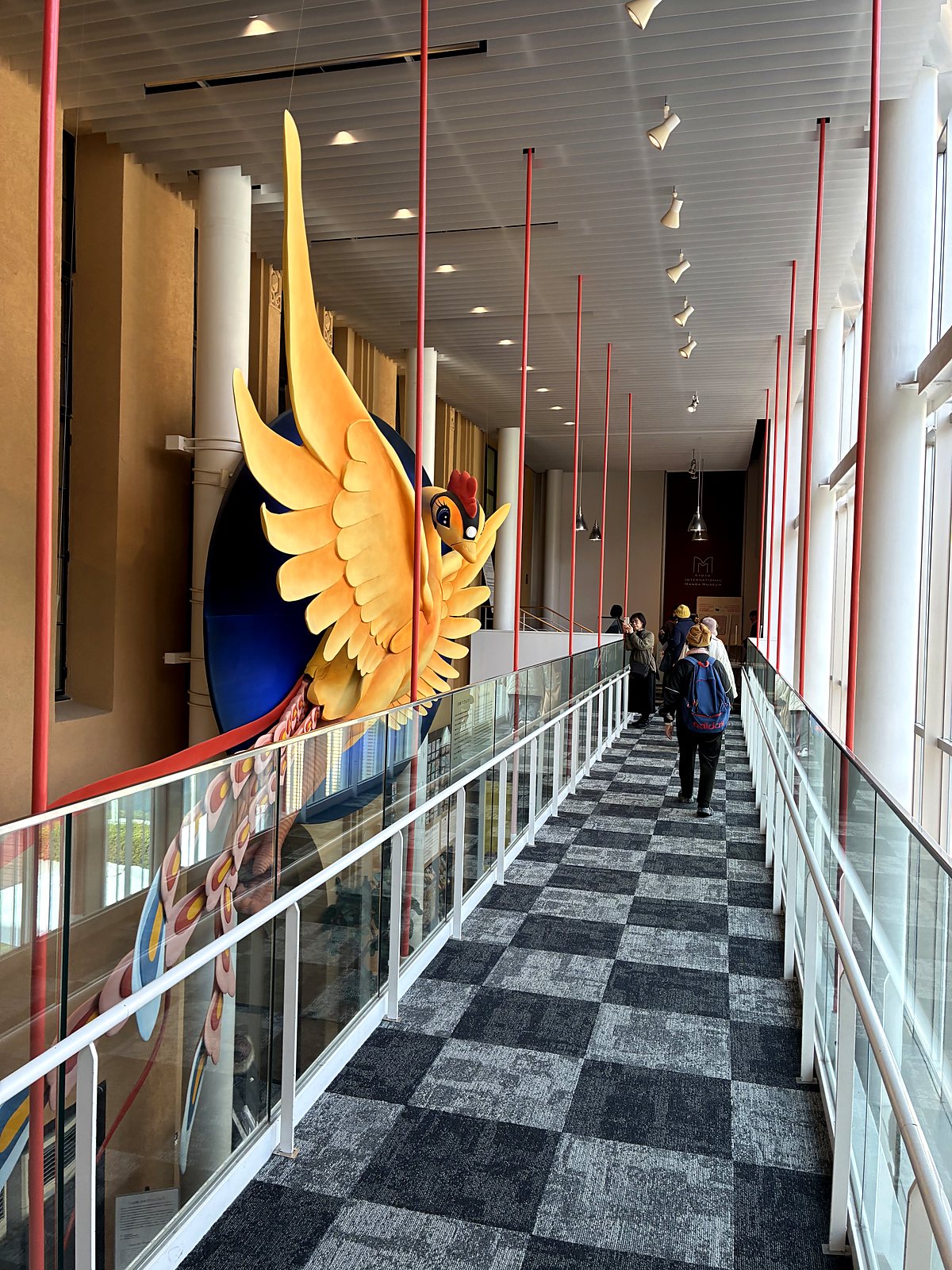
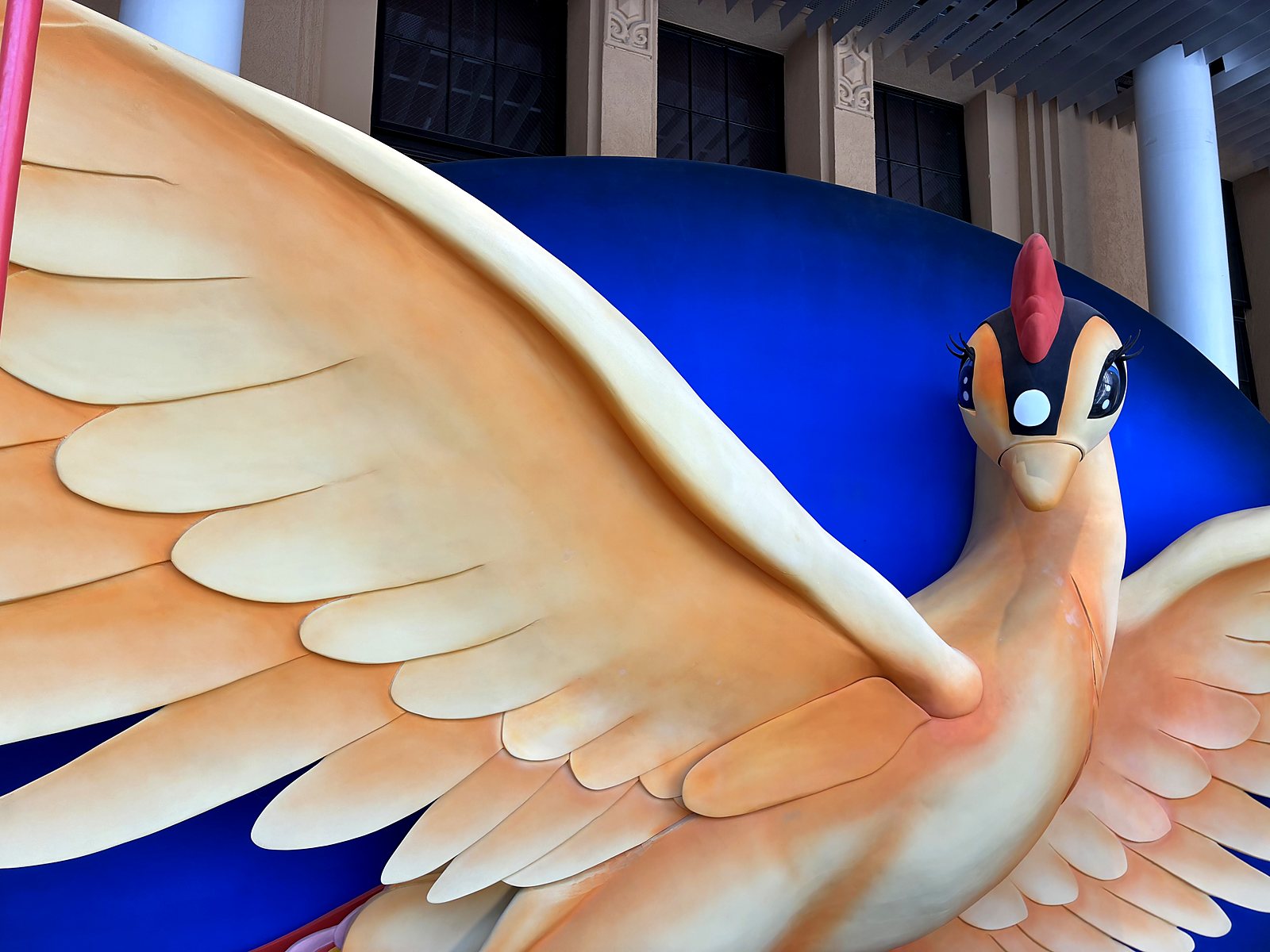
Fans of Osamu Tezuka, the creator of Astro Boy, should look up in the atrium. The giant Phoenix from his life’s work Phoenix (Hi no Tori) is 4.5 meters tall and 11 meters wide, and it was carved from red pine by a Buddhist sculptor in 2009, using the same yosegi-zukuri joined-wood technique as temple statues. Even the eyes are made with gyokugan, the crystal-eye technique used to make Buddha statues look alive. Only in Kyoto.
Kamishibai: the show you shouldn’t skip
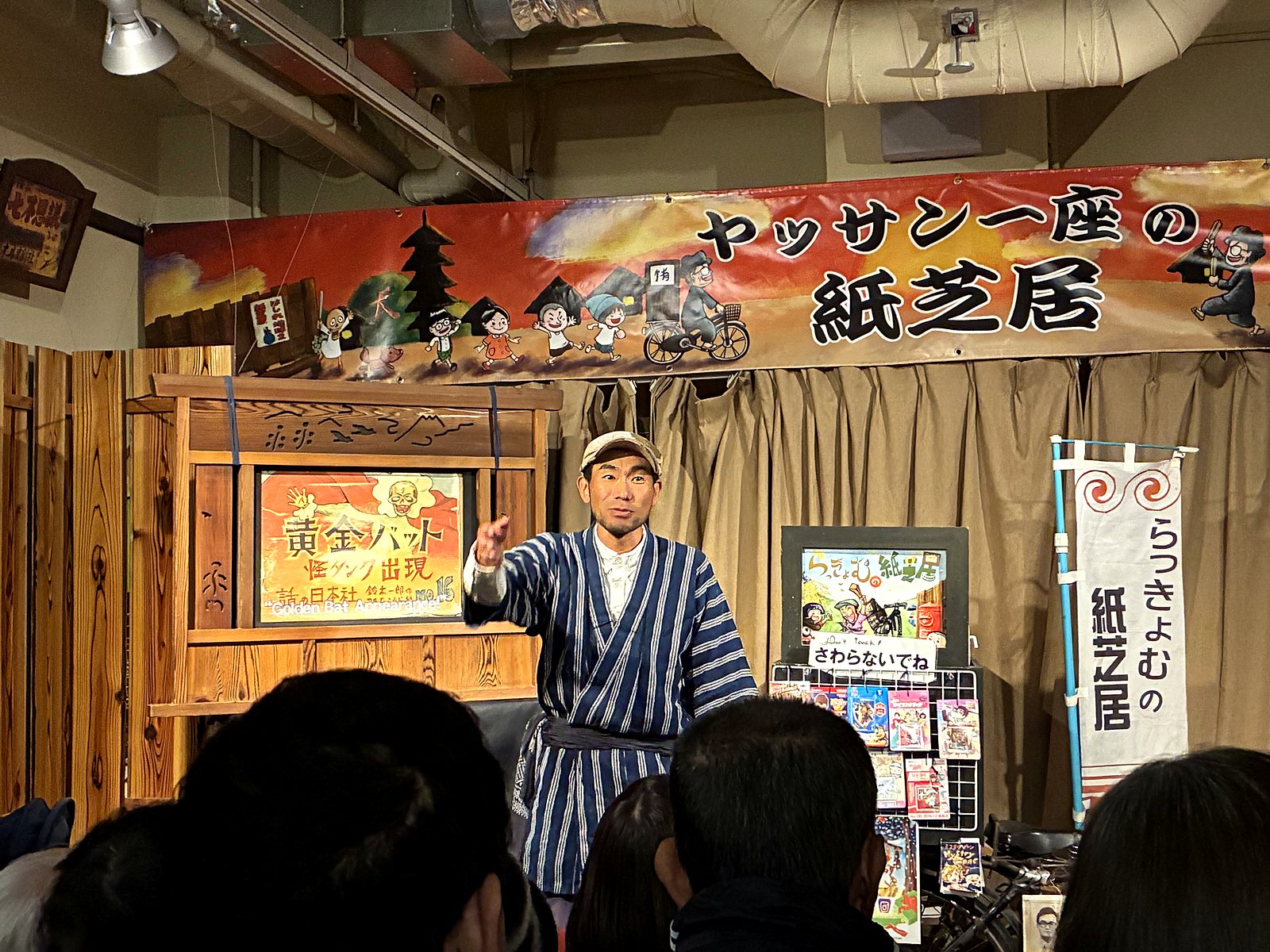
My favorite hour of the day was the kamishibai (paper theater). Before TV, storytellers traveled through Japanese neighborhoods on bicycles, telling stories with picture cards and selling candy to the kids. The museum keeps this tradition alive with a daily show in a little theater built to look like an old street corner.
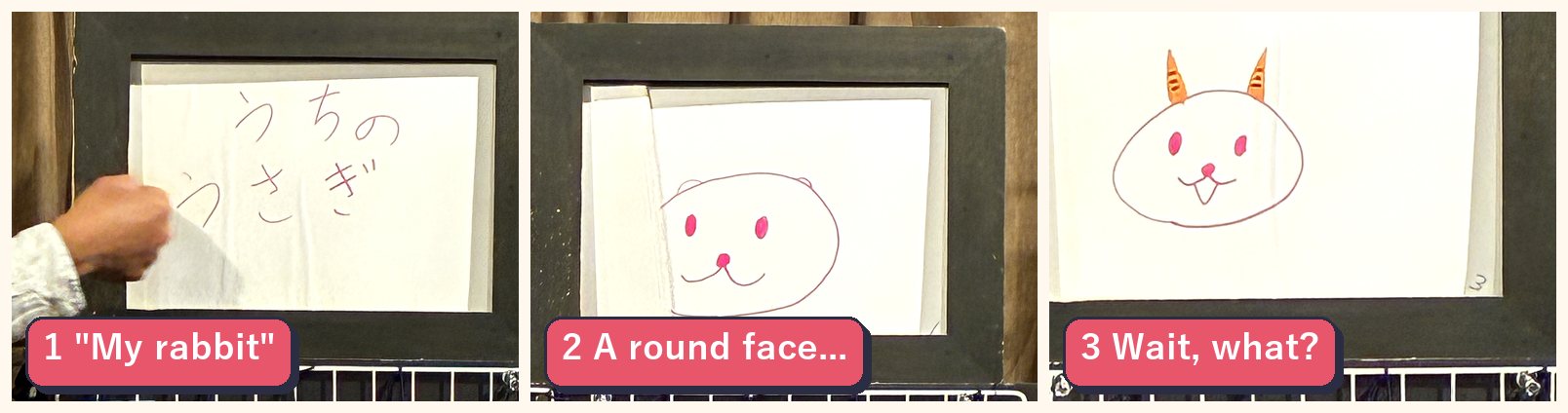
It began with a picture quiz with the audience. A card reading “My rabbit,” then a round face, then… wait, that’s not a rabbit. Even without understanding every word, everyone laughed.
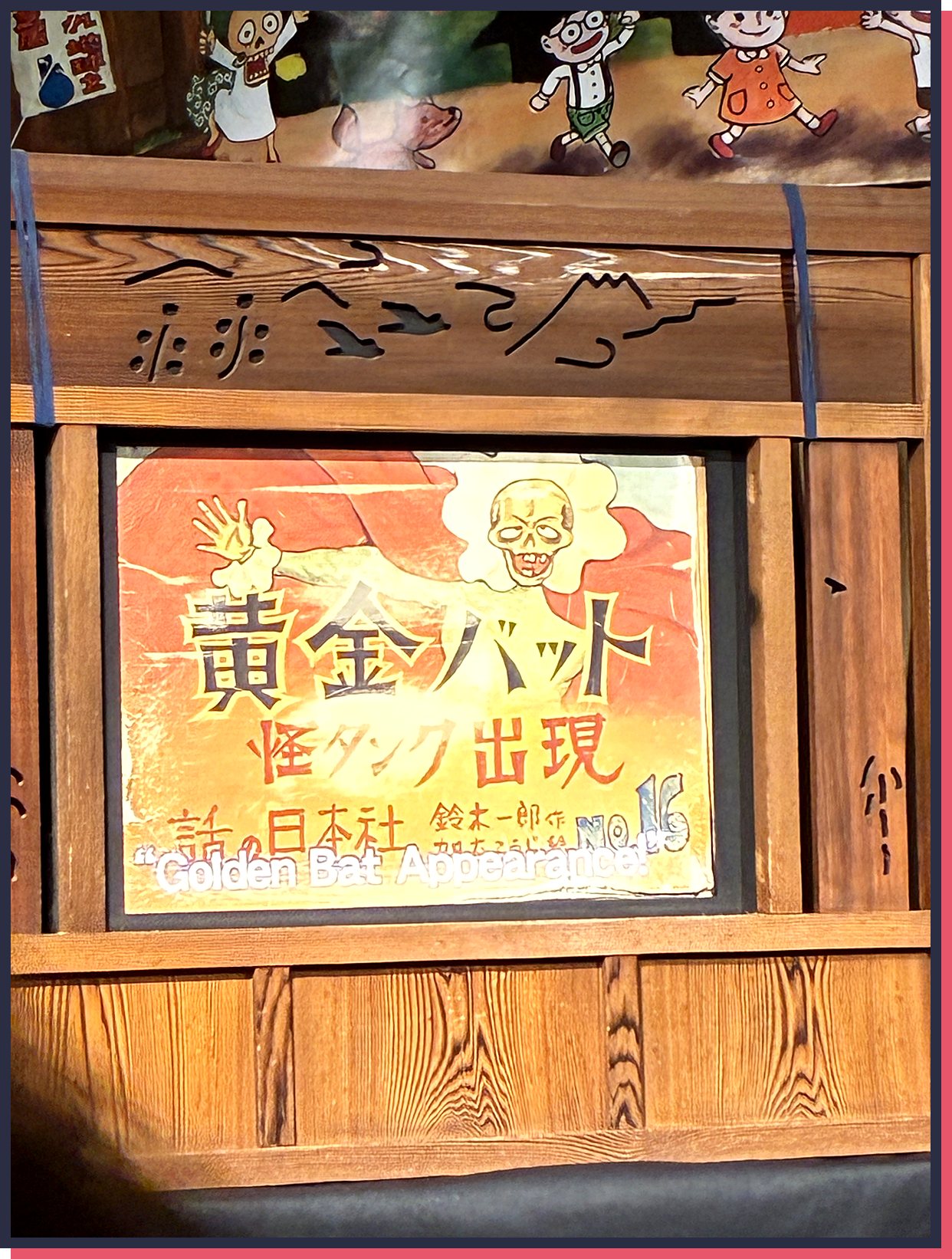
The main story was Golden Bat (Ogon Bat), a skull-faced superhero who appeared in Japanese paper theater around 1930, years before Superman. And here’s the great news for international visitors: the picture cards had English subtitles. Watch the storyteller’s energy in this clip (sound on).
To finish, the storyteller demonstrated katanuki, an old candy game where you carefully carve a shape out of a thin sugar tablet with a pin. Break it, and you lose. Kids in Japan used to win prizes from candy shops for a perfect cut.
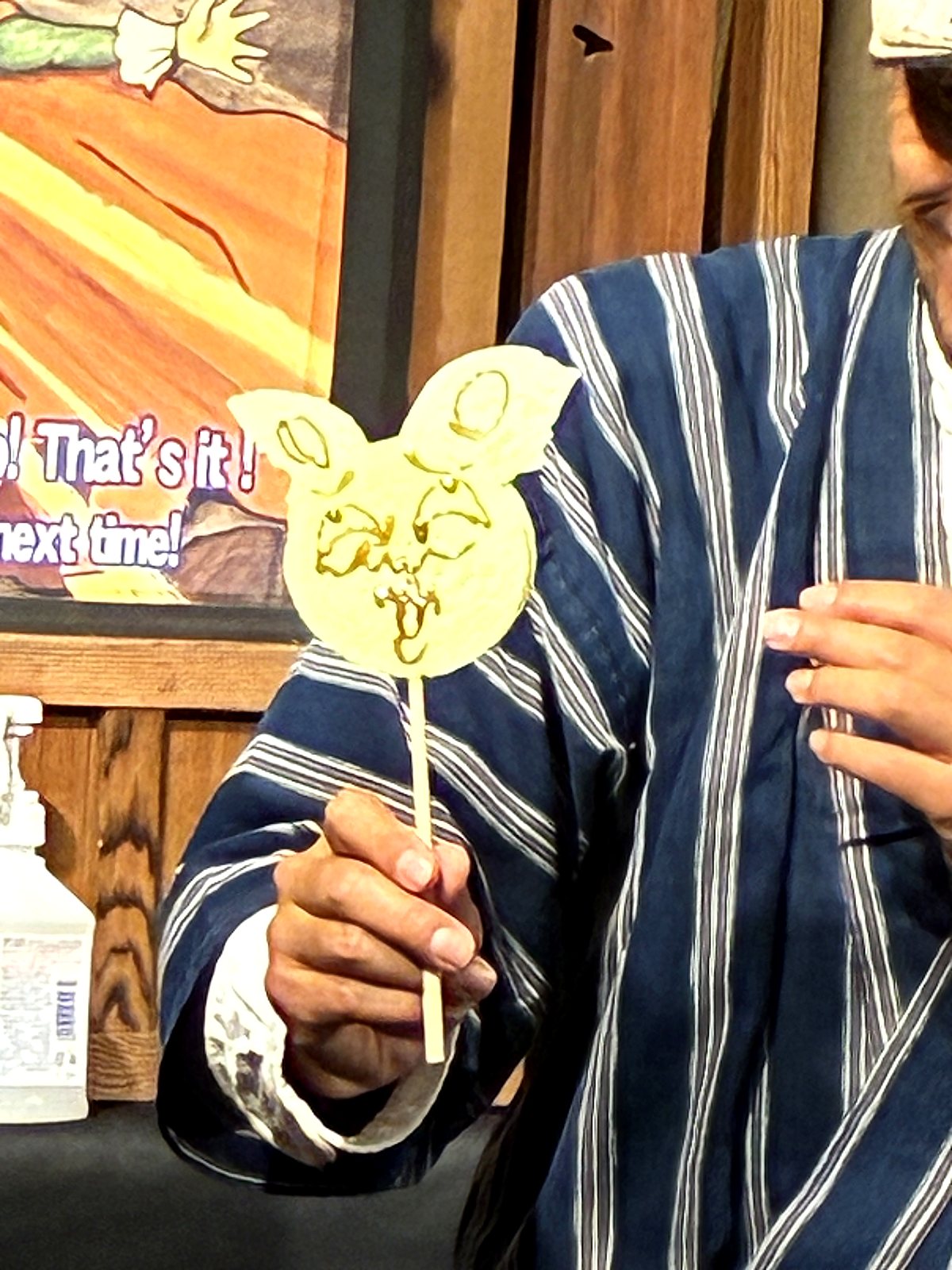
The kamishibai runs at 11:30 and 14:00 on opening days, about 30 minutes each, on the 2nd floor. Plan your day around it!
Manga from around the world, and live drawing
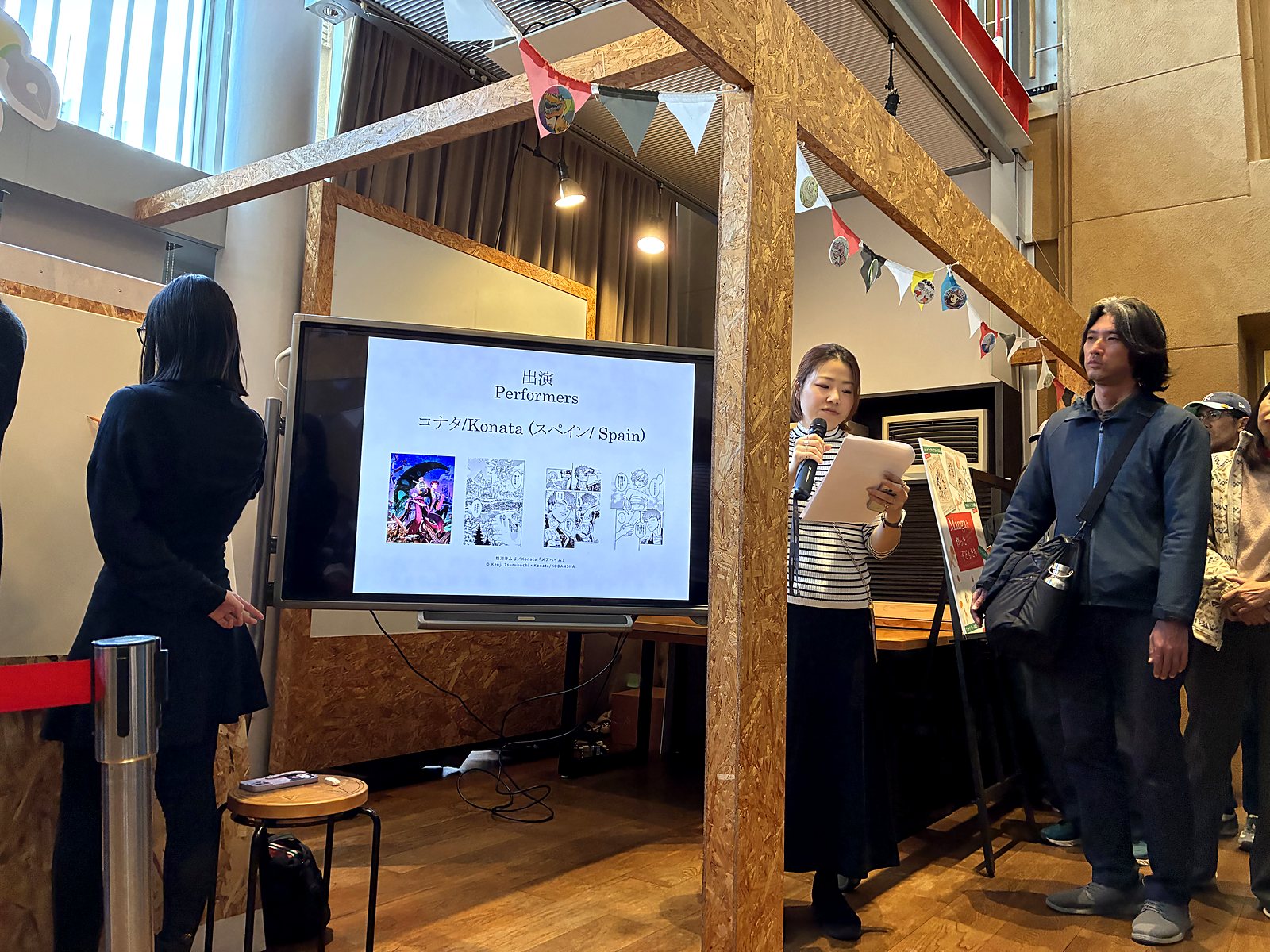
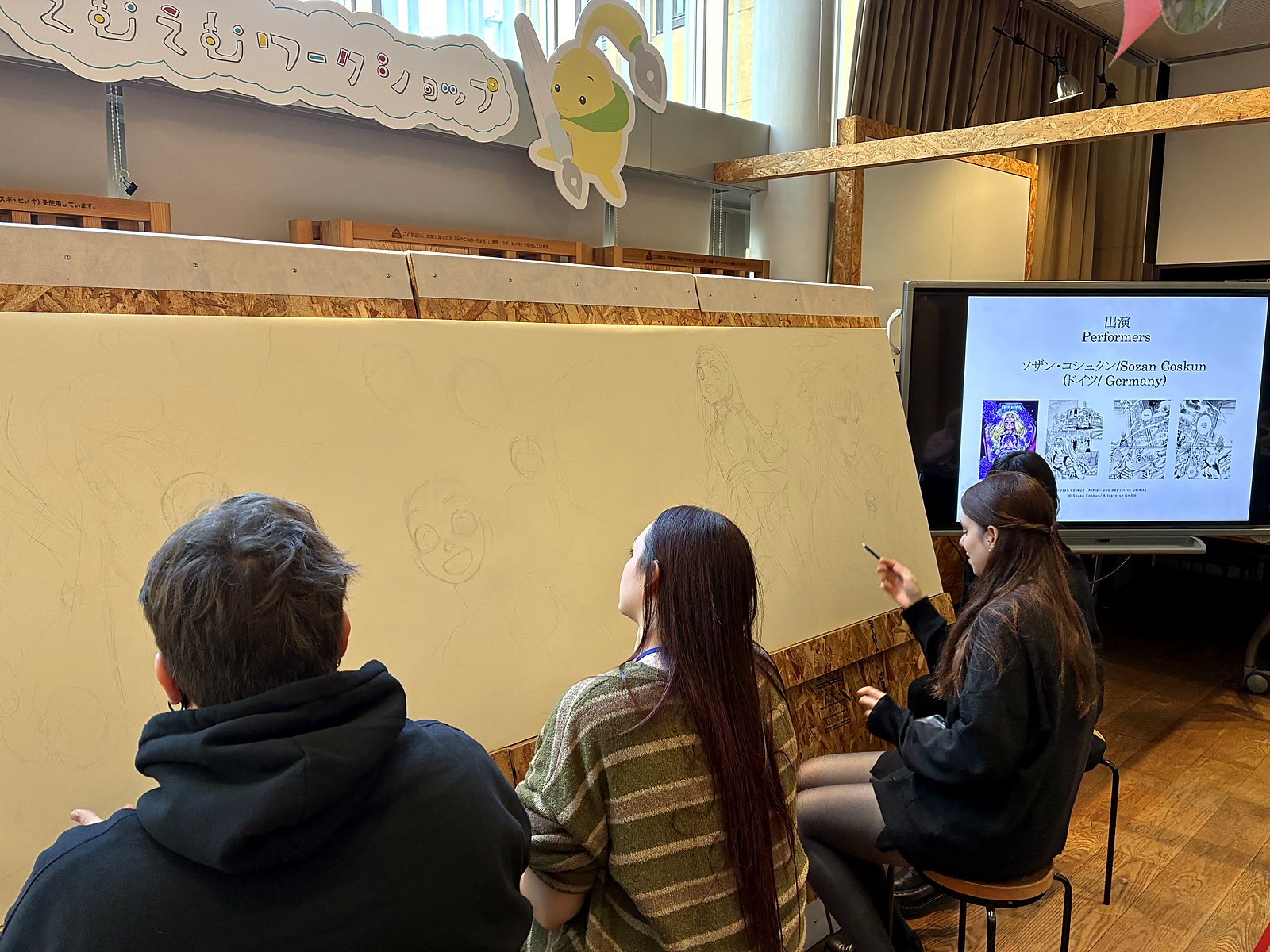
On the anniversary day, four European manga artists from France, Spain, Italy and Germany drew one big artwork together, live. They are part of the current special exhibition on 40 years of manga culture in Europe (until January 19, 2027).
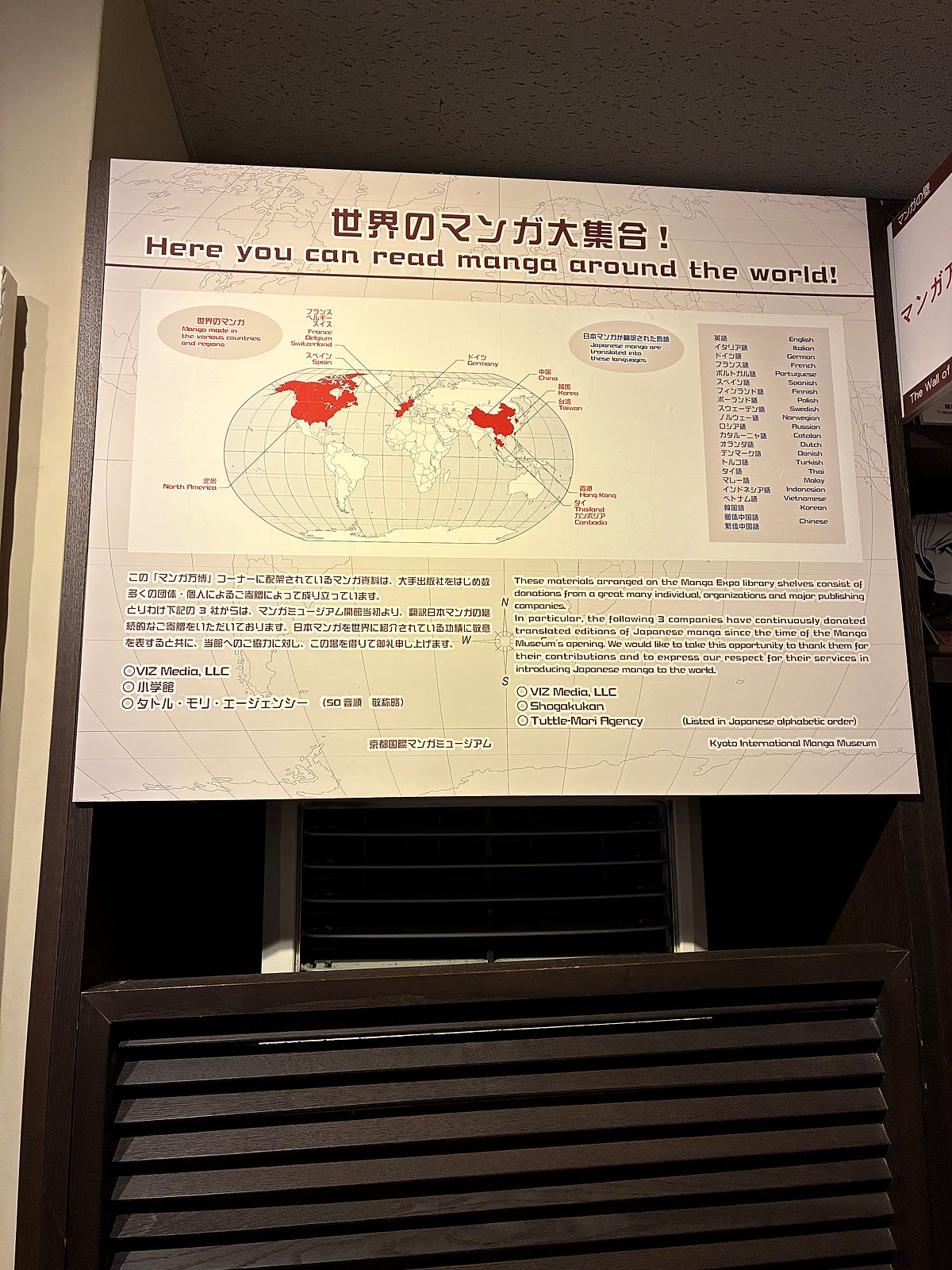
This corner is a small surprise for travelers. The sign lists around 20 languages, from French, Spanish and Russian to Indonesian, Malay, Thai, Vietnamese, Korean and Chinese. Look closely and you’ll spot your own language on the shelves.
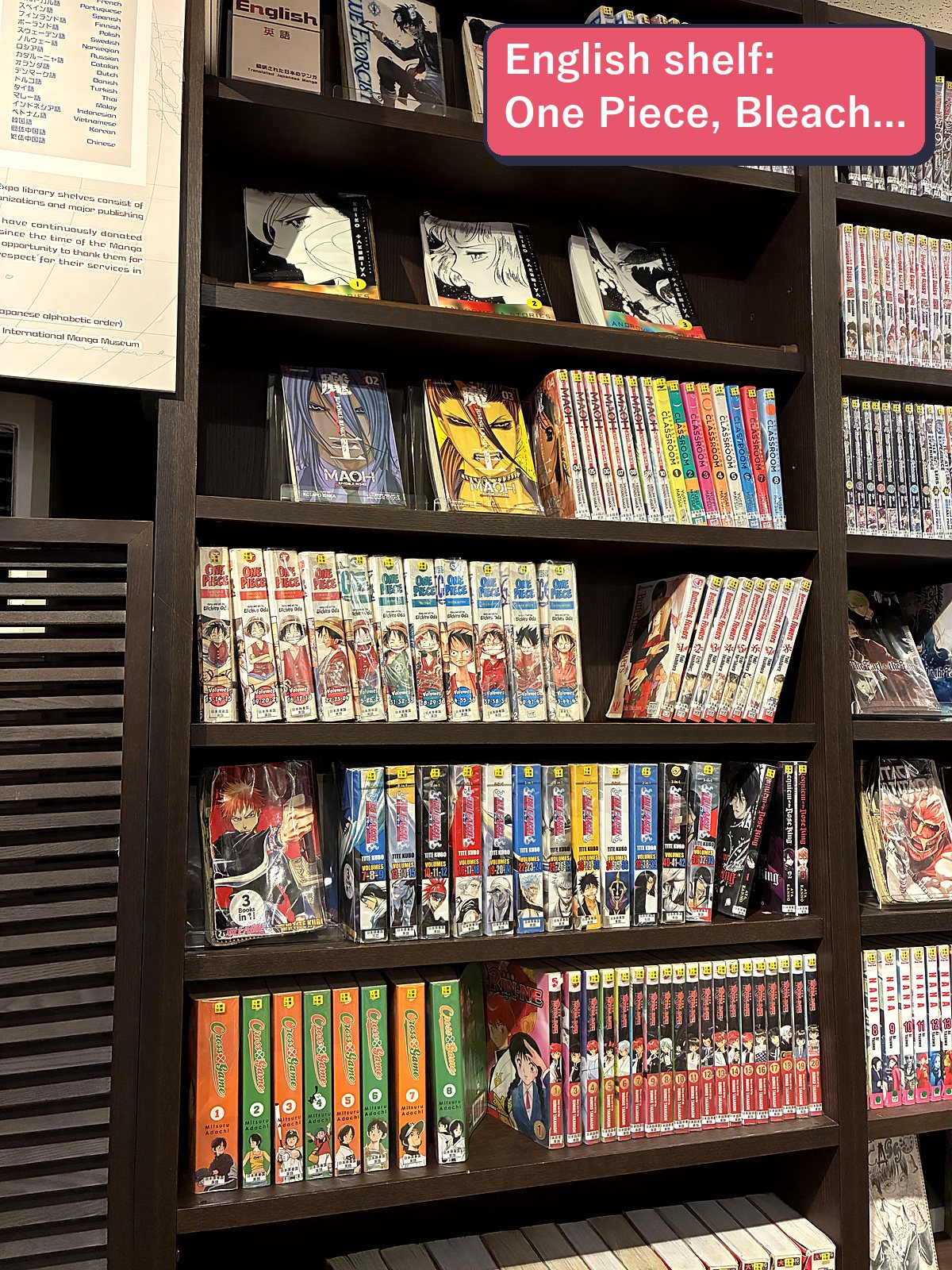
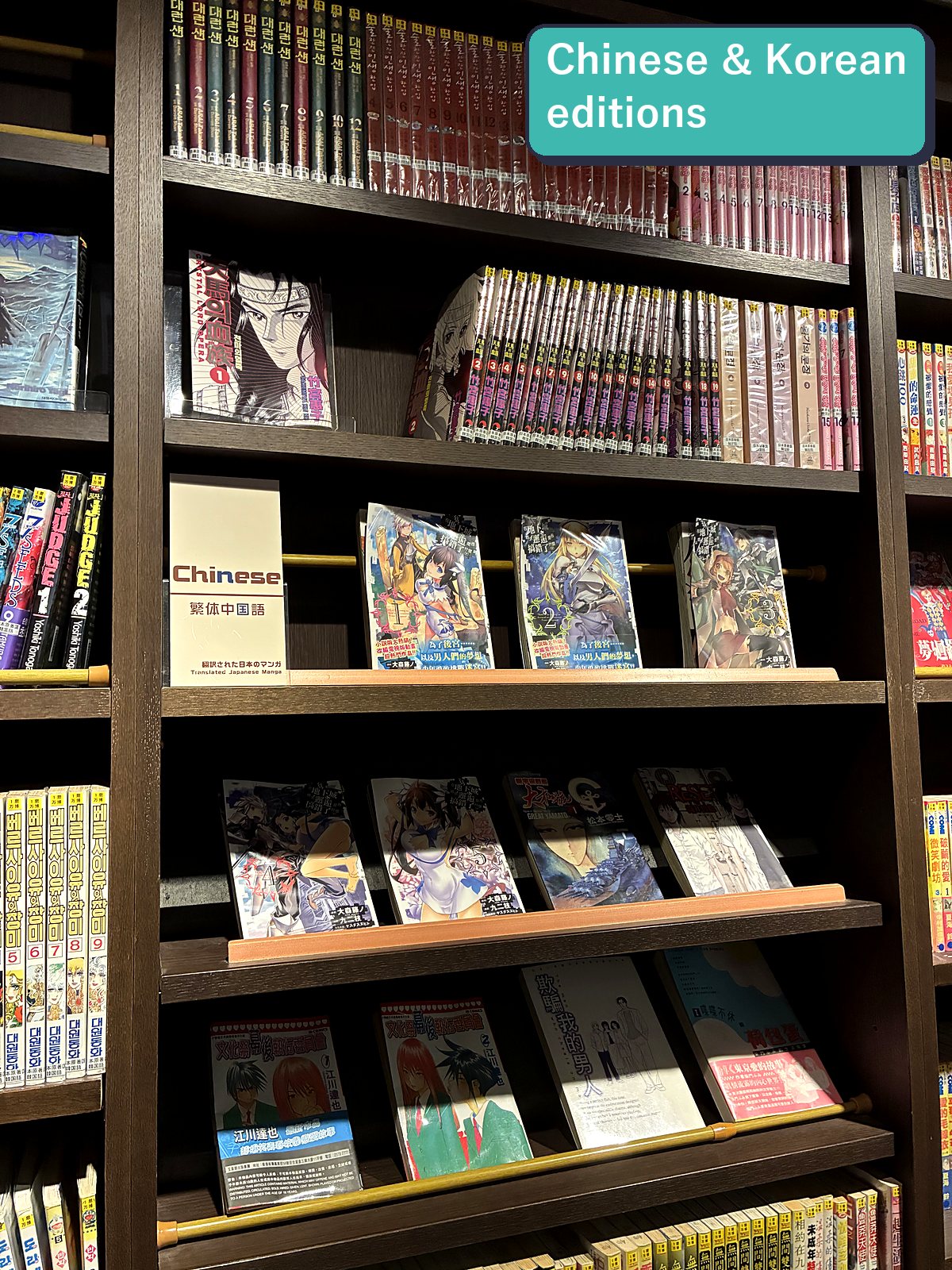
My favorite trick: pick a series you already know in English, then find the same volume in Chinese or Korean and compare how the sound effects and jokes were translated. It’s a little language lesson hidden on a bookshelf.
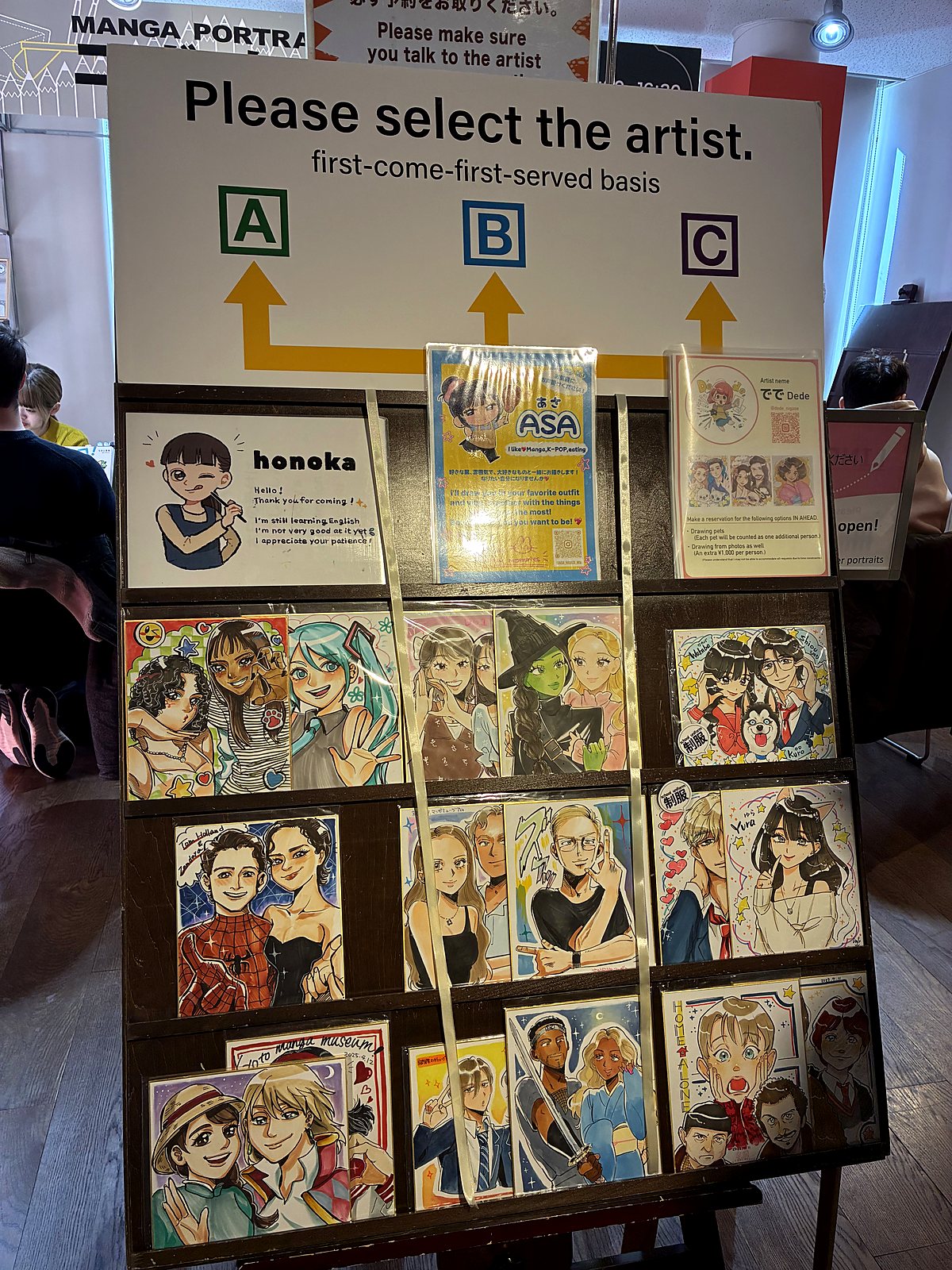
There’s also a hands-on corner where you can try drawing with a pen tablet, and a portrait corner (Nigaoe) where artists draw you in manga style. Choose your artist from their sample boards. It makes a one-of-a-kind souvenir. Check the price and waiting time at the counter.
Small things that make the visit easy
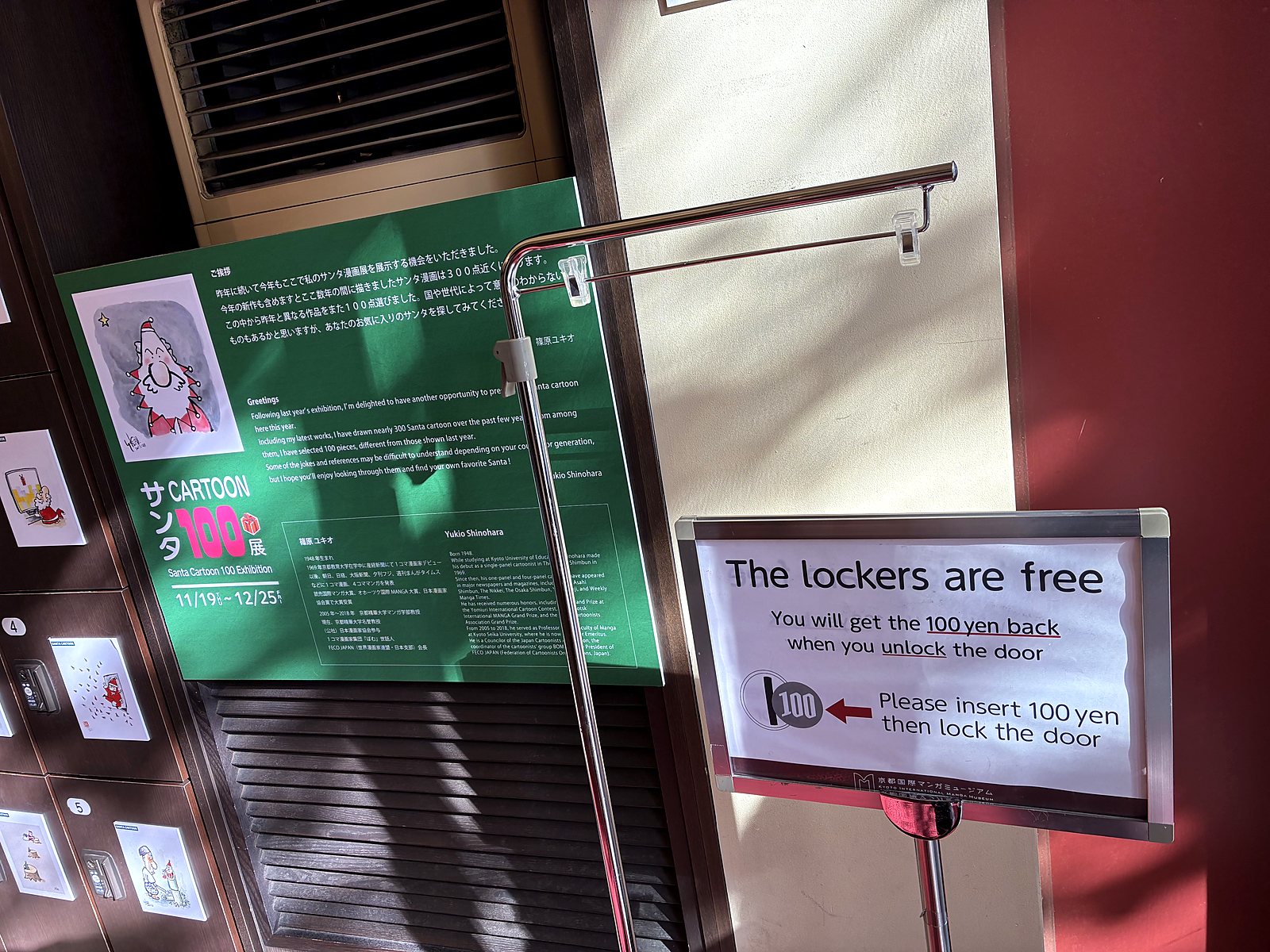
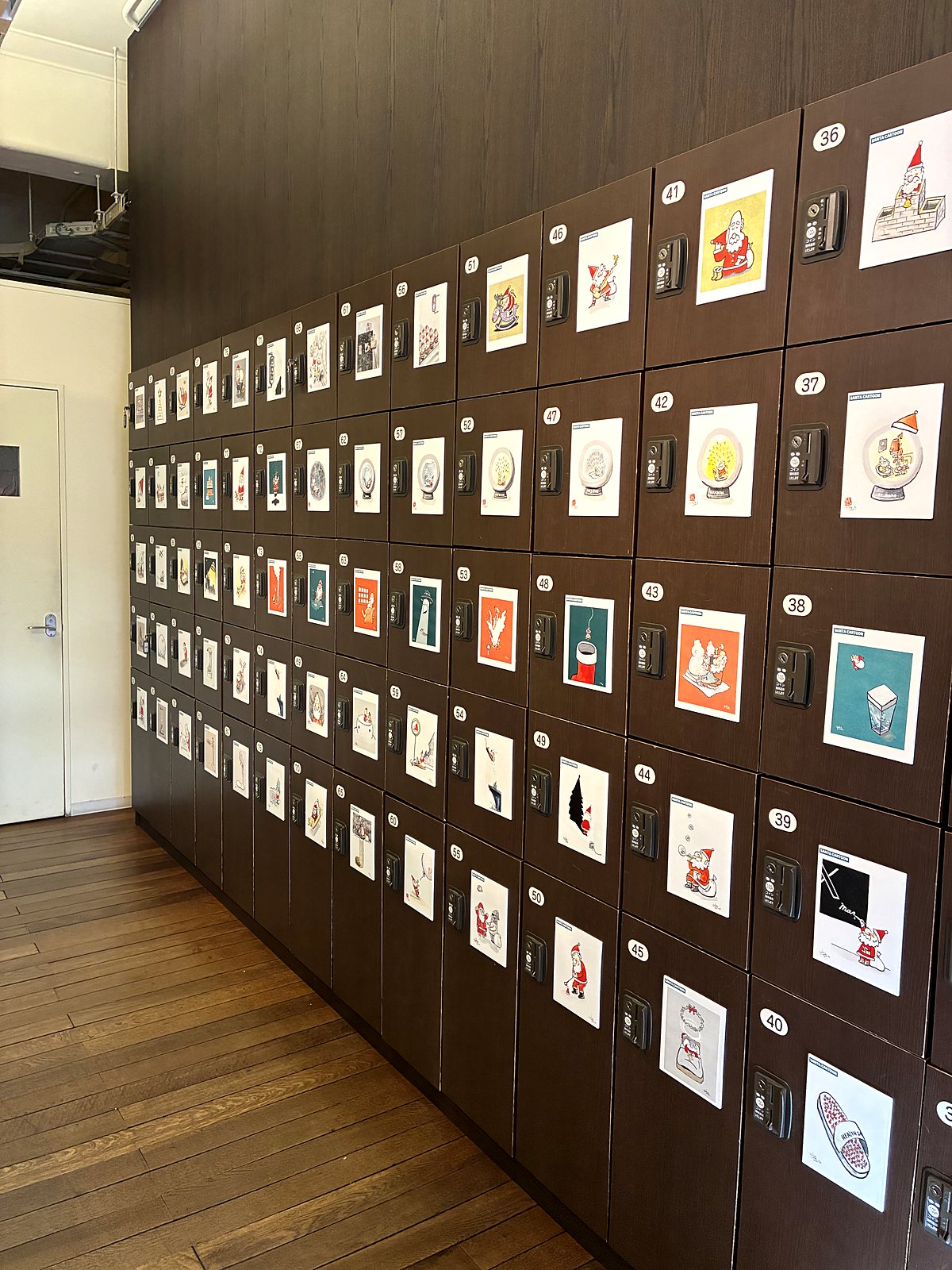
- Free lockers: leave your backpack and explore light (the ¥100 coin comes back)
- English everywhere it matters: signs and floor maps
- Museum shop: please note that photos are not allowed inside the shop
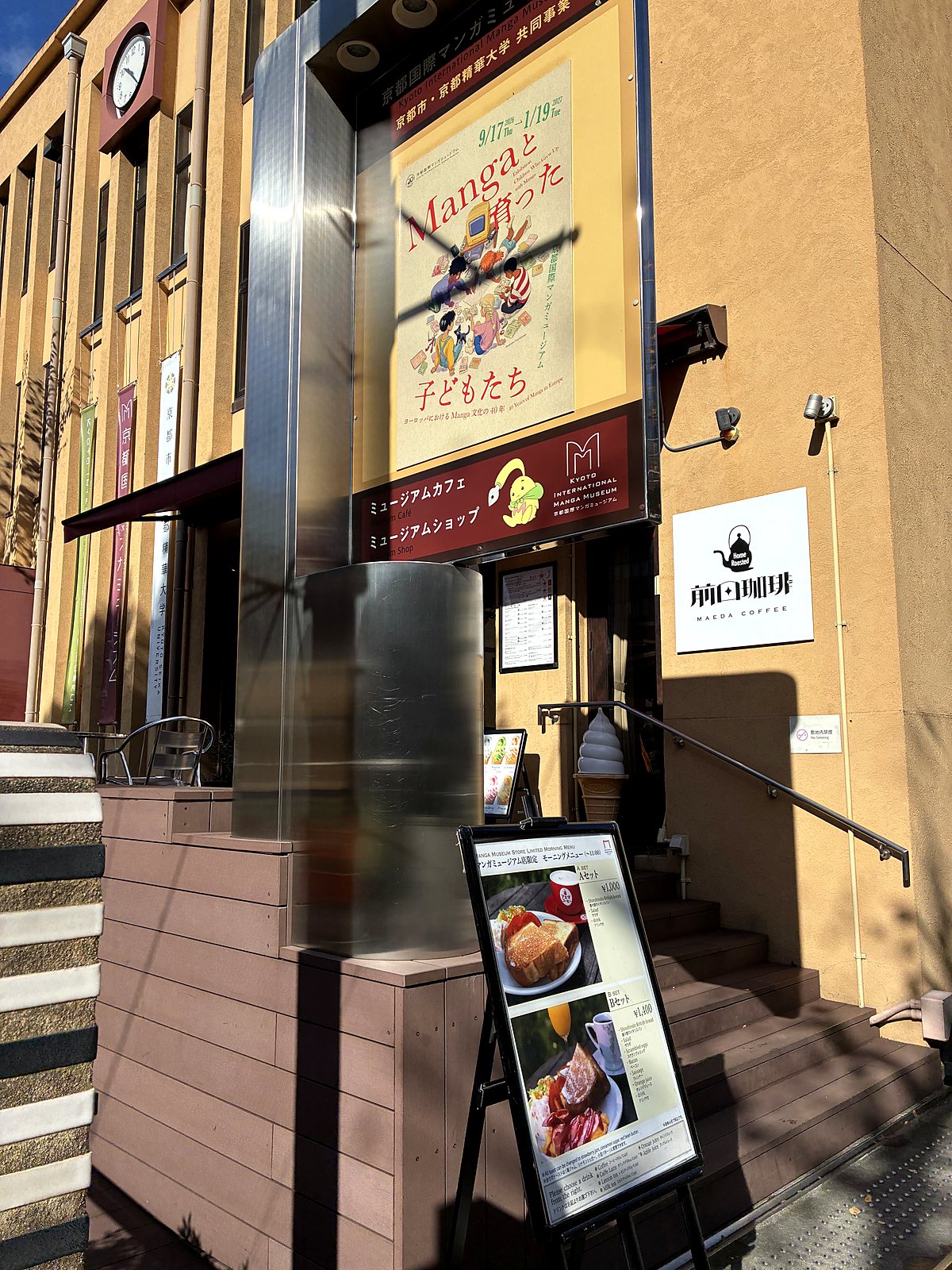
- Café on site: rest, then go back in with your same-day re-entry
Is it worth $8? My honest verdict
Yes. If you love manga, you could easily spend a whole day here. If you don’t, the old school building, Miyazaki’s hand, the Phoenix and the kamishibai show still make it one of the most unique stops in central Kyoto. My recommended plan: arrive by 11:00, catch the 11:30 kamishibai, have lunch outside, then come back in the afternoon to find the manga shelf from the year you were born.
| Item | Details |
|---|---|
| Address | Karasuma-dori Oike-agaru, Nakagyo-ku, Kyoto |
| Access | 2 min walk from Exit 2 of Karasuma Oike Station (Karasuma and Tozai subway lines) |
| Time needed | 2–3 hours (a full day for big manga fans) |
| English support | English signs, translated manga corner, English subtitles at kamishibai |
| Best for | Manga and anime fans, families, rainy days in Kyoto |
Check hours, events and online tickets
Sources: Kyoto International Manga Museum official website (hand casts, Phoenix sculpture, kamishibai pages) and signs at the museum, checked on November 25, 2026. Exhibitions change over time.
The bottom line
The Kyoto International Manga Museum isn’t just a place to read manga. It’s a place where 100 years of Japanese pop culture lives inside a nearly 100-year-old school, where you can stand in front of Miyazaki’s hand and laugh at a paper-theater superhero, even if you don’t speak Japanese. Add it to your Kyoto list!
This article reflects information as of November 25, 2026. Please check the official website before your visit.